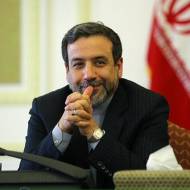
A senior adviser to parliament speaker Mohammad Bagher Ghalibaf dismissed the move as meaningless, warning it was 'a ploy to buy time for a surprise strike.'
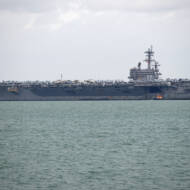
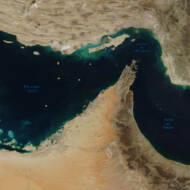
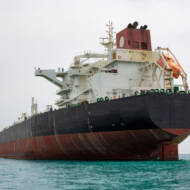
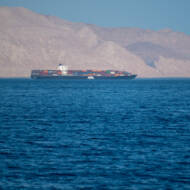
Iran’s government said on Saturday that it had reimposed 'strict control' over the Strait of Hormuz as gunboats of the Islamic Revolutionary Guard Corps fired on three commercial vessels.
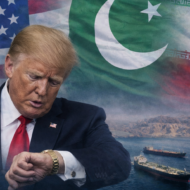
Regional mediators, including Pakistan, Egypt and Turkey, were pushing a 45-day ceasefire as part of a two-phase deal that could lead to a permanent end to the fighting.
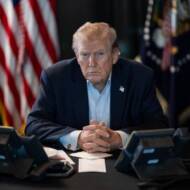
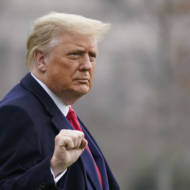
In an address to the nation on April 1, the president said that the U.S.-Israel military campaign against Iran could conclude within two to three weeks as the 'core strategic objectives' are near completion.
If this conflict accomplished nothing else, it has shown that Iran's ballistic missile program represents an existential danger to countries in both the Middle East and Europe.
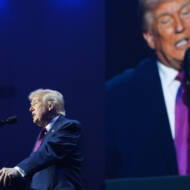
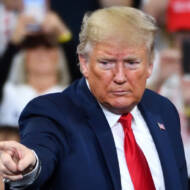
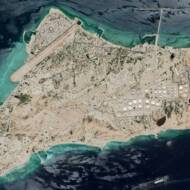
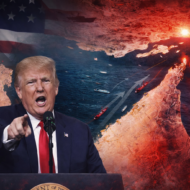
'We will conclude our stay in Iran by blowing up and completely obliterating all of their electric generating plants, oil wells and Kharg Island,' Trump warned.
Something fundamental has changed. The aura of inevitability has been broken. The image of invulnerability has been shattered. Fear has begun to change sides.
By keeping a narrow economic lifeline open—such as continued oil exports—Washington may be attempting to prevent further escalation while preserving incentives for restraint within Iran’s political system.
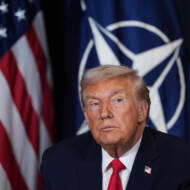
'If Iran doesn’t FULLY OPEN, WITHOUT THREAT, the Strait of Hormuz, within 48 HOURS from this exact point in time, the United States of America will hit and obliterate their various POWER PLANTS, STARTING WITH THE BIGGEST ONE FIRST!' Trump posted.
Iran’s attack was in retaliation for what it said was an Israeli strike on its part of the same field, which is located in the middle of the Persian Gulf.
Trump said he hoped that China, France, Japan, South Korea, the United Kingdom and other nations 'that are affected by this artificial constraint' would send vessels
'If for any reason mines were placed and they are not removed forthwith, the military consequences to Iran will be at a level never seen before,' Trump wrote.
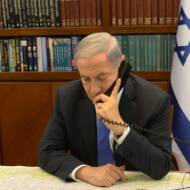
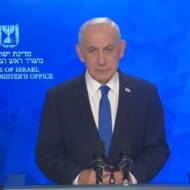
'Through the bold actions of our pilots and those of the United States, we have achieved almost complete control of the skies over Iran,' Netanyahu said.
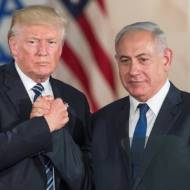
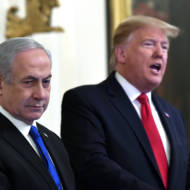
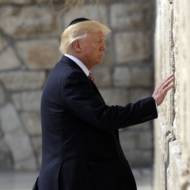
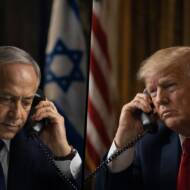
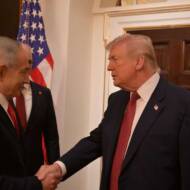
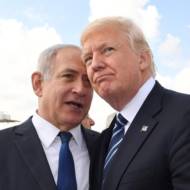
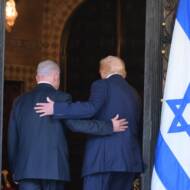
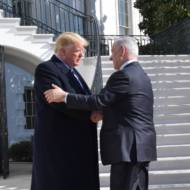
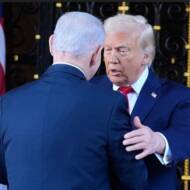
For the first time in decades, truly courageous leadership has emerged in the presence of U.S. President Donald J. Trump and Israeli Prime Minister Benjamin Netanyahu.
Scapegoating Israel and, by extension, its Jewish supporters, in this particular way is redolent of traditional antisemitic tropes about Jews of dual loyalty.
Trump has shown that he dares to defy the conventional wisdom that the Washington liberal establishment has used to justify inaction or appeasement of Iran.