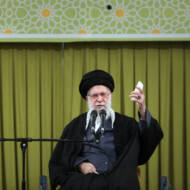
The US Central Intelligence Agency reportedly provided a human source to verify the exact location where Khamenei was expected to be on the day of the strike.
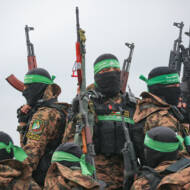
A MEMRI report revealed that the biggest threats from terrorist deployment of AI cannot be predicted and that Islamists have discovered they too can use LLMs for brainstorming fresh ideas to pursue their violent objectives.
Data collected from more than 8,000 simulated oral exams indicated that scores rose by an average of nearly four points between the first and the most recent practice sessions.
The center will promote collaboration in key areas such as cybersecurity, genetics, medicine, and water and food security — particularly urgent issues for the Middle East.
The study analyzed four popular chatbot programs powered by artificial intelligence: GPT (OpenAI), Claude (Anthropic), Gemini (Google), and Llama (Meta).
With AI entering our world, the question arises of where this field is going regarding the battlefield, especially when we’re talking about simulators.
At Sheba’s 3D Center, surgeons used a precisely designed skull model to reconstruct IDF officer Omri Rosenblit’s facial structure after he was severely injured when a building collapsed on him in Khan Yunis.
The system, created by experts from the IDF’s 8200 unit and United Hatzalah’s technology department, leverages 18 years of data to position ambulances and resources near predicted emergency locations with over 90% accuracy.
CyTwist’s engine analyzed and countered suspicious code behaviors during a live simulation test to uncover malware designed to evade traditional signature-based and rule-driven tools.
Researchers found that while AI can analyze and predict the reliability of information, it still lags behind humans in nuanced tasks like evaluating personal memories.
The technology was able to find not only blatant instances of antisemitism but could also detect anti-Jewish hate in puns, allusions, coded language, and symbols.
 Français
 Español
 English
 Portuguese