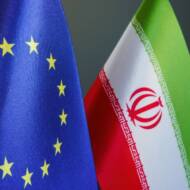
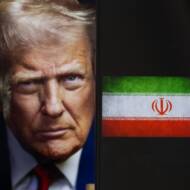
Here is the truth: no signing ceremony changes, and it carries no insult to the campaign: no agreement, not this one and not a better one, can permanently guarantee that Iran never builds a bomb.
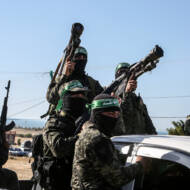
More than 3,000 terrorists from Hamas and other Palestinian terrorist groups crossed into Israel on Oct. 7, carrying out murders, rapes, kidnappings, and looting across hundreds of locations.
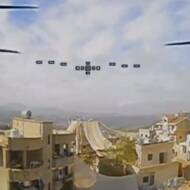
The relationship between Jerusalem and Washington is too close, too strategic, and too deeply integrated for either side to imagine that Hezbollah’s aggression should go unanswered.
Trump prefers an agreement to another prolonged war, but he also understands that an agreement reached through weakness can produce an even greater conflict.
The American goal in Middle Eastern conflicts usually is for its allies—including Israel—to successfully defend themselves and then to reestablish peace in the region as quickly as possible.
A side that rejects partition, launches a war to destroy a country, and then loses that war cannot honestly remove its own decisions from the chain of events that followed.
The truce touted by Trump will not end any of those wars, none of which is likely to end unless Iran breaks with Khomeinism and chooses another trajectory.
At different moments, he warned of devastating consequences for Iran, then hours later claimed the regime was ready to negotiate and desperate for a deal.
Do not listen to the liberal media outlets that are telling you to stop, de-escalate, or accept 20-year fake 'moratoriums' or other idiotic half-measures.
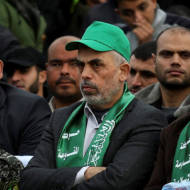
The message, along with other documents seized by the IDF over the past two years, exposes extensive strategic coordination between Hamas, Hezbollah, and Iran.
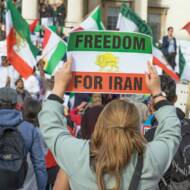
The brave Iranian people represent millions of 'boots on the ground'—if only they would have the means to defend themselves to shift the balance of power.
Inside Iran, the regime presents even symbolic contacts with major Western leaders as evidence that powerful countries are appealing to Tehran and acknowledging its importance.
Critics often frame Iranian politics as a struggle between moderates and hardliners, but this distinction has repeatedly proven disastrously misleading.
The trajectory of the dual blockade is leading toward a war of macroeconomic attrition, testing the thresholds of both the Iranian state and the global economy.
Given the obvious inadequacies of the Lebanese government and the demonstrated continued willingness and capacity of Hezbollah to continue aggression against Israel, is the buffer zone likely to acquire a look of permanence?
The idea that Iran's beleaguered people will suddenly, somehow, with no weapons whatsoever, magically rise up and take back their country from a regime armed to the teeth and with a rich record of mass murder is beyond delusional.
At its peak, Lebanon enjoyed one of the highest GDP per capita levels in the region and was regarded as a rare oasis of stability in a turbulent Middle East.
Al-Jazeera Arabic has repeatedly broadcast speeches by senior Hamas figures, such as Khaled Mashaal, Ismail Haniyeh, Saleh al-Arouri, Mohammed Deif and Khalil al-Hayya.
 Français
 Español
 English
 Portuguese