 Français
 Español
 English
 Portuguese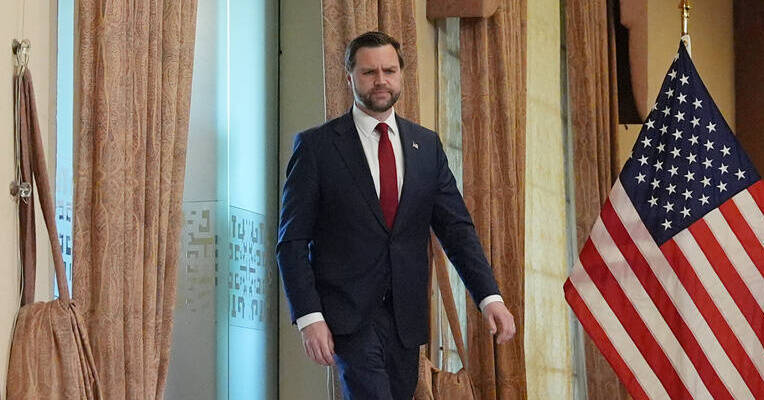
“We just could not get to a situation where the Iranians were willing to accept our terms,” Vance said.
By United with Israel Staff
U.S. Vice President JD Vance left Islamabad without a deal after 21 hours of negotiations with Iran, as talks between the sides broke down.
Speaking before departing Pakistan for Washington, Vance said the discussions ended without agreement, placing responsibility on Tehran for rejecting U.S. terms.
“The bad news is that we have not reached an agreement,” he said, adding that it is “bad news for Iran much more than it’s bad news for the United States.”
Vance stressed that Washington’s core demand remains a firm, long-term commitment that Iran will not pursue nuclear weapons. “We need to see an affirmative commitment that they will not seek a nuclear weapon, and we haven’t seen that yet,” he said.
He added that the U.S. negotiated “in good faith” and presented what he described as a final proposal, but “we just could not get to a situation where the Iranians were willing to accept our terms.” He declined to provide further details, saying he did not want to negotiate publicly.
According to The New York Times, citing Iranian officials familiar with the negotiations, major sticking points included the reopening of the Strait of Hormuz, the fate of Iran’s enriched uranium stockpile and Tehran’s demand for the release of roughly $27 billion in frozen assets.
U.S. negotiators reportedly pushed for the immediate reopening of the strait, but Iran refused, with one official saying there would be no change to its status until a broader agreement is reached.
An Iranian Foreign Ministry spokesman said some progress had been made but acknowledged that disagreements remained on two key issues, preventing a final deal. He said the talks took place in an atmosphere of “distrust” and that it was not expected to reach an agreement in a single round.
Tensions during the negotiations appeared to escalate, with Turkish journalist Cetiner Cetin reporting that a heated exchange between Iranian Foreign Minister Abbas Araghchi and U.S. envoy Steve Witkoff nearly turned physical.
“There was tension between Minister Abbas Araghchi and Witkoff that nearly led to a physical fight due to serious disagreements over the management of the Strait of Hormuz,” Cetin wrote on X.
The collapse of the talks leaves both sides at an impasse, with Washington signaling its proposal remains on the table while warning time is limited. Vance said the U.S. has presented its “final and best offer” and will now wait to see if Iran accepts.
It remains unclear whether Tehran will reconsider its position or whether the breakdown will lead to renewed escalation in the coming days.
Do You Love Israel? Make a Donation - Show Your Support!

Donate to vital charities that help protect Israeli citizens and inspire millions around the world to support Israel too!
Now more than ever, Israel needs your help to fight and win the war -- including on the battlefield of public opinion.
Antisemitism, anti-Israel bias and boycotts are out of control. Israel's enemies are inciting terror and violence against innocent Israelis and Jews around the world. Help us fight back!

