The study found that SuperAgers produced about twice as many new neurons as healthy older adults and roughly two and a half times as many as people diagnosed with Alzheimer’s disease.
The operation involved implanting four electrodes in two separate regions of the brain, rather than the standard approach of two electrodes in a single target area.
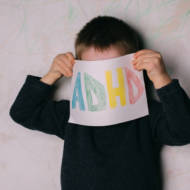
Researchers compared 23 children diagnosed with ADHD with 33 without the condition and found clear differences in both performance and the underlying brain signal.
The research emphasizes that older adults learn best when education taps into their motivations, connects new knowledge to previous experience, and allows for active engagement.
'Another Brick in the Wall's' low bass tones caused brain cells to vibrate, increased activity in specific neural regions, and triggered the release of proteins associated with cellular stimulation.
BrainsWay's technology uses Deep Transcranial Magnetic Stimulation (dTMS)—a non-invasive therapy that employs magnetic pulses to target areas of the brain associated with depression.
Israeli scientists are transforming urine-derived cells into functioning mini-brains to study neurological disorders, test drugs more effectively, and personalize treatments.
 Français
 Español
 English
 Portuguese