 Français
 Español
 English
 Portuguese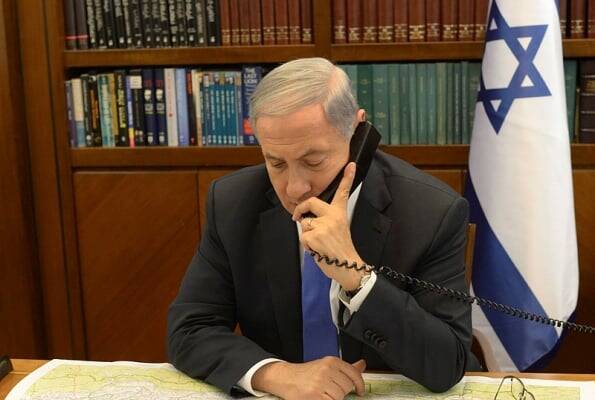
Later Thursday, a report introduced a new dimension, placing Israel directly at the center of the apparent pause.
By United with Israel Staff
As intense speculation built Wednesday night that the United States was preparing to strike Iran, a move that would likely carry major implications for Israel and the entire Middle East, no attack materialized.
By Thursday morning, the absence of action left officials, analysts, and journalists searching for explanations, as a steady stream of ambiguous and often conflicting reports appeared across major media outlets.
Some of the reporting suggested internal caution inside the administration. The Wall Street Journal reported that officials told President Trump a large-scale strike on Iran was unlikely to bring down the government and could instead ignite a broader conflict.
According to the report, U.S. officials were weighing whether to first observe how Tehran handles the protest movement before deciding on the scale of any potential strike.
Other accounts pointed to regional diplomacy. A report by Agence France-Presse, citing a Saudi official, suggested Saudi Arabia, Qatar, and Oman urged Trump to give Iran additional time, effectively persuading Washington to allow another window for developments to unfold.
Trump himself added to the uncertainty with cryptic public remarks. Speaking to NBC, Trump said of Iran, “We saved a lot of lives yesterday,” but refused to say whether the United States would strike, adding, “I’m not going to tell you that.”
The comments did little to clarify whether the White House had truly stepped back from the brink or was simply delaying a decision.
Even during the height of the drama, uncertainty appeared to be part of the picture.
A Western military official told Reuters that “all signs point to a U.S. strike on Iran being close,” but added a notable caveat about the administration’s approach. “Uncertainty is part of the strategy,” the official said, suggesting Washington often behaves this way to keep adversaries guessing.
Later Thursday, however, a report in The New York Times introduced a new dimension, placing Israel directly at the center of the apparent pause.
According to the Times, Prime Minister Benjamin Netanyahu asked Trump to postpone any plans for an American military attack on Iran, as nationwide protests continued to spread and intensify.
A senior U.S. official told the newspaper that Netanyahu spoke to Trump on Wednesday, the same day the American president publicly claimed he had received information from “very important sources on the other side” indicating that Iran had stopped killing protesters and was not moving forward with executions.
The Times said that message appeared to signal Trump was backing away from a potential U.S. strike on Iran, an option he had been weighing for days. But the report also stressed that Trump has sent similar ambiguous signals before, including last June, even after he had largely made up his mind to order an attack.
The Times added that late Wednesday, a senior U.S. official said Trump had not set aside the military options his commanders presented in recent days, and that whether he orders an attack depends on what Iranian security agencies do next in response to the mass protests.
The White House confirmed that Netanyahu and Trump spoke on Wednesday but declined to elaborate on the content of the call, marking the first U.S. acknowledgment of direct contact between the two leaders since the uprising in Iran began.
At least for now, it remains unclear whether Trump has delayed action, ruled it out, or is deliberately keeping his options open. Netanyahu’s office did not comment on the Times report, and the White House spokeswoman declined to address the substance of the conversation.
Taken together, the reporting leaves a foggy picture, shaped as much by what is not being said as by what is being leaked.
Whether the shifting narrative reflects genuine last-minute deliberations, competing pressures from allies and regional partners, or an intentional strategy of ambiguity, the effect has been the same: Tehran, Jerusalem, and Washington remain locked in a high-stakes waiting game, with no clear signal of what comes next.
Do You Love Israel? Make a Donation - Show Your Support!

Donate to vital charities that help protect Israeli citizens and inspire millions around the world to support Israel too!
Now more than ever, Israel needs your help to fight and win the war -- including on the battlefield of public opinion.
Antisemitism, anti-Israel bias and boycotts are out of control. Israel's enemies are inciting terror and violence against innocent Israelis and Jews around the world. Help us fight back!

