 Français
 Español
 English
 Portuguese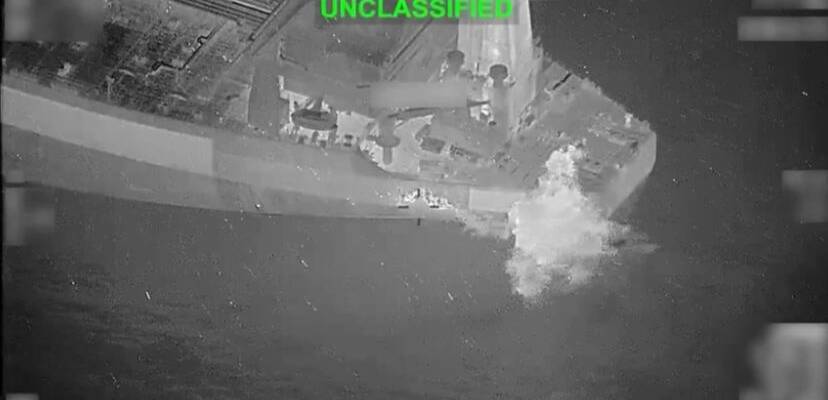
A short time later, Iran launched a wave of missiles and drones across the Gulf region.
By United with Israel Staff
A new flare-up in the Persian Gulf and Strait of Hormuz on Tuesday night raised fears of a broader regional escalation after U.S. forces intercepted Iranian attacks and enforced maritime blockade measures against a tanker attempting to reach Iran.
Earlier Tuesday, U.S. Central Command (CENTCOM) announced that American forces had disabled the Botswana-flagged oil tanker M/T Lexie as it attempted to transit toward Iran’s Kharg Island oil terminal.
According to CENTCOM, the vessel ignored repeated warnings and failed to comply with instructions from U.S. forces over a 24-hour period. A U.S. aircraft ultimately disabled the ship by firing a Hellfire missile into its engine room, preventing it from reaching the Iranian port.
The action was carried out as part of a maritime blockade imposed on Iranian ports in April. CENTCOM said U.S. forces have now disabled six commercial vessels and redirected 122 others while enforcing the blockade.
A short time later, Iran launched a wave of missiles and drones across the Gulf region.
CENTCOM said U.S. and allied forces successfully intercepted multiple Iranian ballistic missiles and drones. According to the military, two missiles fired toward Kuwait either broke apart or fell short of their targets, while three missiles launched toward Bahrain were intercepted by U.S. and Bahraini air defenses.
American forces also shot down three Iranian attack drones heading toward civilian shipping and conducted self-defense strikes against an Iranian military drone control station on Qeshm Island.
The U.S. military rejected Iranian claims that the attacks had successfully struck the headquarters of the U.S. Fifth Fleet in Bahrain and an American air base elsewhere in the region.
“All Iranian attacks on American forces failed,” CENTCOM said, adding that no U.S. personnel were harmed.
Additional Iranian drones targeting U.S. forces in Kuwait were intercepted later Tuesday night, according to the military.
However, reports emerging from the Gulf suggested at least some Iranian attacks may have caused damage.
Kuwait’s civil aviation authority announced that emergency procedures had been activated after Terminal 1 at the country’s main airport was reportedly struck by Iranian drones. According to the authority, the attack caused significant damage to several airport facilities, resulted in casualties, and forced flight delays and diversions. Footage circulating online appeared to show extensive damage at the airport.
Meanwhile, Bahrain’s Defense Ministry announced that it had intercepted three Iranian missiles and several drones directed at civilian targets.
The latest exchanges mark one of the most significant Iranian attacks against Gulf states since the ceasefire was announced. The missile launches, drone attacks, maritime interdictions, and retaliatory strikes highlighted the growing fragility of the truce and raised concerns that the conflict could once again spill across multiple fronts in the region.
Do You Love Israel? Make a Donation - Show Your Support!

Donate to vital charities that help protect Israeli citizens and inspire millions around the world to support Israel too!
Now more than ever, Israel needs your help to fight and win the war -- including on the battlefield of public opinion.
Antisemitism, anti-Israel bias and boycotts are out of control. Israel's enemies are inciting terror and violence against innocent Israelis and Jews around the world. Help us fight back!

