 Français
 Español
 English
 Portuguese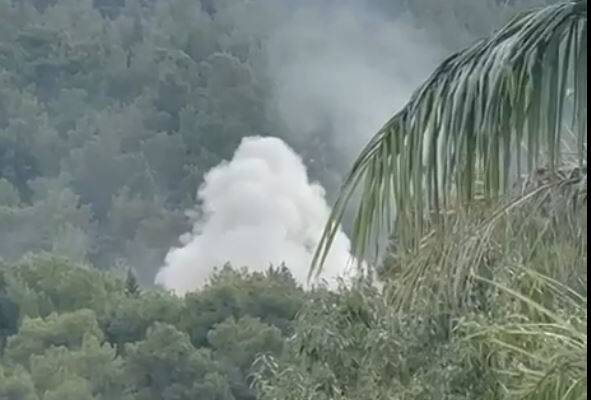
“We promised security to the residents of the north, and we must deliver,” Smotrich wrote.
By United with Israel Staff
A series of Hezbollah drone and rocket attacks over the past 24 hours is raising new questions about how Israel will respond under its recently announced Beirut policy, which authorizes strikes in the Lebanese capital for launches that cross into Israeli territory.
On Sunday morning, hostile aircraft infiltration sirens sounded across several northern communities after two Hezbollah drones entered Israeli airspace from Lebanon. The IDF later confirmed that both aerial targets fell inside Israeli territory near the border. No injuries were reported.
Several hours later, sirens again sounded across parts of northern Israel after another drone infiltrated Israeli airspace and crashed near the border. The military said the incident remains under investigation.
The latest drone infiltrations followed rocket fire Saturday night toward the northern Israeli town of Metula, marking yet another ceasefire violation by Hezbollah.
The incidents add to a growing list of attacks and security violations along the northern border despite the ceasefire arrangement.
According to Israeli Ambassador Yechiel Leiter, more than 50 rockets and attack drones have been launched at IDF forces in recent days, while additional barrages crossed into Israeli territory, sending residents to bomb shelters.
“This is not what ceasing fire looks like,” Leiter wrote, accusing Hezbollah of continuing to challenge the agreement while attempting to reestablish its presence in southern Lebanon.
Back to the Hezbollah “ceasefire” tracker – what did the last 48 hours look like?
💥 Over 50 rockets and killer drones fired at IDF troops.
💥 2 more barrages into Israeli territory, sending Israeli citizens to bomb shelters.
💥 Multiple encounters with Hezbollah terrorists…
— Ambassador Yechiel (Michael) Leiter (@yechielleiter) June 13, 2026
The attacks come just days after Israel’s security cabinet reportedly approved a new response policy aimed at strengthening deterrence. Under the directive, any launch from Lebanon that enters Israeli territory could trigger a strike in Beirut without requiring additional authorization from the political leadership.
The policy was announced after repeated violations of the ceasefire and reflects growing frustration in Israel over Hezbollah’s continued military activity despite ongoing IDF operations across southern Lebanon.
Finance Minister Bezalel Smotrich said this week that the latest launches represent a direct test of the policy.
“The fire toward northern communities is a test of the Dahieh equation that the prime minister announced,” Smotrich said. “We promised security to the residents of the north and we must deliver.”
National Security Minister Itamar Ben Gvir echoed that sentiment, declaring, “For every drone, a missile. For every violation, fire. For every UAV, Dahieh should shake.”
Yet despite the pressure for a forceful response, Israel’s decision-making may be complicated by broader regional developments.
When Israel previously struck Beirut in response to Hezbollah attacks, Iran retaliated by launching ballistic missiles toward northern Israel. At the time, President Donald Trump reportedly urged Netanyahu to scale back further strikes in order to avoid jeopardizing ongoing negotiations with Tehran.
Now, with Trump signaling that a U.S.-Iran agreement is nearing completion and could be signed within days, Israeli officials may face a difficult balancing act between enforcing the new policy and avoiding actions that could derail a deal Washington views as a major diplomatic achievement.
So far, Israel has continued to focus its response on Hezbollah positions in southern Lebanon, where the IDF says troops are destroying tunnel networks, weapons depots, launch sites, and other terror infrastructure.
However, the repeated rocket and drone attacks are likely to intensify pressure on the government to enforce the newly announced Beirut policy, particularly after it was presented as a new deterrence framework designed to prevent exactly these types of violations.
Do You Love Israel? Make a Donation - Show Your Support!

Donate to vital charities that help protect Israeli citizens and inspire millions around the world to support Israel too!
Now more than ever, Israel needs your help to fight and win the war -- including on the battlefield of public opinion.
Antisemitism, anti-Israel bias and boycotts are out of control. Israel's enemies are inciting terror and violence against innocent Israelis and Jews around the world. Help us fight back!

