 Français
 Español
 English
 Portuguese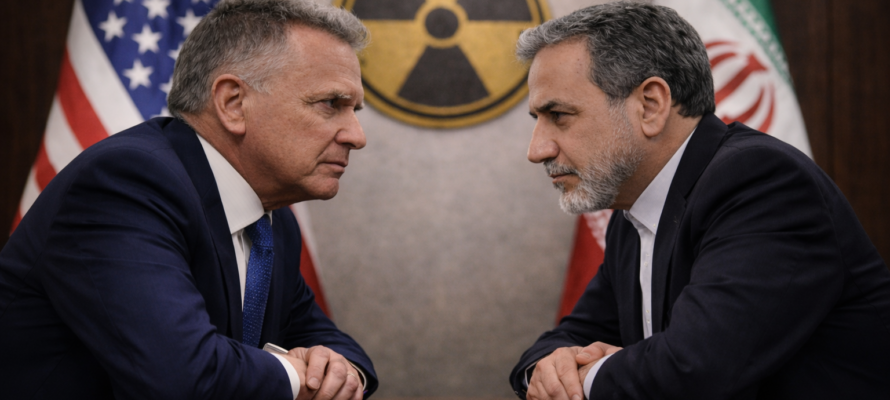
The Wall Street Journal reported that Washington and Tehran remain far apart on several key issues and that no agreement was reached.
By United with Israel Staff
Indirect negotiations between the United States and Iran concluded Thursday night in Geneva without a breakthrough, leaving major disputes unresolved despite what many officials had viewed as a decisive opportunity to prevent further regional escalation.
The talks unfolded over several rounds of discussions throughout the day, with delegations meeting before breaking for hours of consultations. Early assessments emerging after the initial session suggested the gap between Washington and Tehran remained wide, tempering expectations for a rapid agreement.
According to an Iranian official speaking to Al Jazeera, Tehran presented a proposal centered on sanctions relief alongside measures intended to address American concerns over its nuclear program. The proposal reportedly included technical and practical steps, as well as data designed to demonstrate that Iran is not pursuing nuclear weapons.
The official said Iran offered a temporary freeze on uranium enrichment for a defined period and a reduction in enrichment levels under International Atomic Energy Agency supervision.
However, Tehran firmly rejected key American demands, including zero enrichment, dismantling nuclear facilities, or transferring enriched uranium abroad. The proposal, the official claimed, “includes everything necessary to reach an immediate agreement.”
Iranian sources quoted by the Qatari newspaper Al-Araby Al-Jadeed accused Washington of repeating what they described as “extreme and unacceptable demands,” arguing that such positions risked undermining the negotiations. The sources said Iran had made clear it would not abandon what it considers its right to peaceful nuclear energy, casting doubt on U.S. intentions to reach a deal.
Later in the evening, negotiations resumed, including direct talks between U.S. envoy Steve Witkoff and Iranian Foreign Minister Abbas Araghchi, according to CNN. The meeting marked a notable development, as much of the diplomacy until now had been conducted indirectly through mediators.
As discussions concluded for the day, both sides struck cautiously optimistic tones while acknowledging that core disagreements remain unresolved. Oman’s foreign minister, Sayyid Badr Albusaidi, whose country has served as the primary intermediary, said “significant progress” had been made and confirmed that negotiations would resume following consultations in the respective capitals, with technical-level discussions scheduled for next week.
Araghchi echoed that assessment, saying, “We managed to achieve some positive things regarding sanctions and the nuclear issue,” and described the current round as “the best and most serious” so far. He added that technical teams would meet in Vienna beginning Monday and that Iran would engage International Atomic Energy Agency experts on outstanding issues.
Despite the measured optimism, reports indicated that fundamental disputes remain intact. According to Al-Mayadeen, Iran rejected proposals related to dismantling nuclear facilities, while The Wall Street Journal reported that Washington and Tehran remain far apart on several key issues and that no agreement was reached.
Attention now shifts to Washington, where Albusaidi is scheduled to meet U.S. Vice President JD Vance and other senior officials on Friday following his mediation efforts in Geneva. The meetings are expected to focus on the next phase of diplomacy and whether momentum from the talks can be preserved.
For now, the negotiations appear suspended between cautious progress and persistent mistrust. With military forces already repositioned across the region and political pressure mounting on both sides, diplomacy remains alive — but fragile. Whether Geneva marked the beginning of a breakthrough or merely a pause before a far more dangerous turn remains an open question.
Do You Love Israel? Make a Donation - Show Your Support!

Donate to vital charities that help protect Israeli citizens and inspire millions around the world to support Israel too!
Now more than ever, Israel needs your help to fight and win the war -- including on the battlefield of public opinion.
Antisemitism, anti-Israel bias and boycotts are out of control. Israel's enemies are inciting terror and violence against innocent Israelis and Jews around the world. Help us fight back!

