 Français
 Español
 English
 Portuguese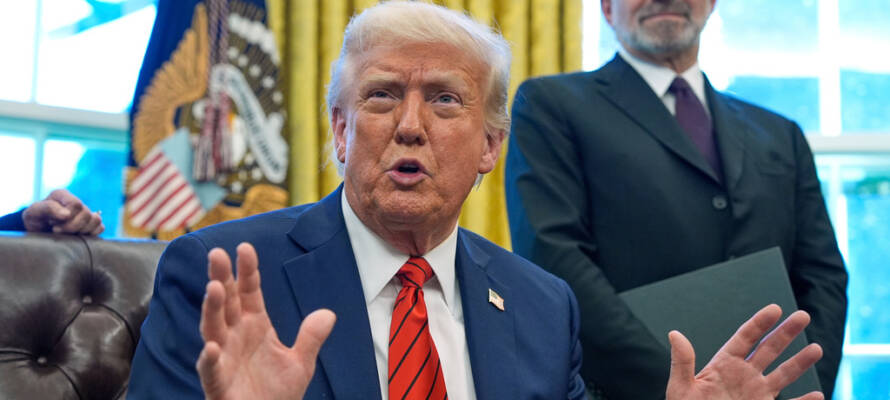
Riyadh informed Washington it would not allow U.S. military aircraft to operate from Prince Sultan Air Base and would also deny use of its airspace for the mission.
By United with Israel Staff
President Donald Trump announced Tuesday evening that the United States will temporarily pause its naval transit operation through the Strait of Hormuz, citing progress in negotiations with Iran.
New details now suggest the dramatic decision was also influenced by a sharp dispute with Saudi Arabia.
In a post on Truth Social, Trump said the pause followed international appeals and diplomatic momentum.
“Based on the request of Pakistan and other Countries… and the fact that Great Progress has been made toward a Complete and Final Agreement… we have mutually agreed that, while the Blockade will remain in full force and effect, Project Freedom will be paused for a short period of time,” he wrote.
However, U.S. officials say the move came after Saudi Arabia reacted angrily to the operation.
According to NBC News, citing two U.S. officials, Riyadh informed Washington it would not allow U.S. military aircraft to operate from Prince Sultan Air Base and would deny use of its airspace for the mission.
A phone call between Trump and Saudi Crown Prince Mohammed bin Salman failed to resolve the dispute in the immediate term, forcing the White House to halt the operation roughly 36 hours after it began.
A Saudi official told NBC News that Trump and the crown prince remain in “ongoing contact” but suggested the rapid pace of developments contributed to the breakdown. “The problem with that assumption is that things move very quickly in real time,” the official said when asked whether the Saudis were caught off guard.
“Project Freedom” was launched earlier this week as a major U.S. military effort to secure commercial shipping through the Strait of Hormuz, one of the world’s most critical energy chokepoints. The operation involved escorting vessels through the waterway under heavy protection following Iranian threats and attacks on shipping.
According to U.S. Central Command, American forces intercepted Iranian cruise missiles and drones and destroyed multiple attack boats targeting vessels under U.S. protection during the initial phase of the operation. The mission included guided-missile destroyers, more than 100 aircraft, unmanned systems, and roughly 15,000 service members.
Do You Love Israel? Make a Donation - Show Your Support!

Donate to vital charities that help protect Israeli citizens and inspire millions around the world to support Israel too!
Now more than ever, Israel needs your help to fight and win the war -- including on the battlefield of public opinion.
Antisemitism, anti-Israel bias and boycotts are out of control. Israel's enemies are inciting terror and violence against innocent Israelis and Jews around the world. Help us fight back!

