 Français
 Español
 English
 Portuguese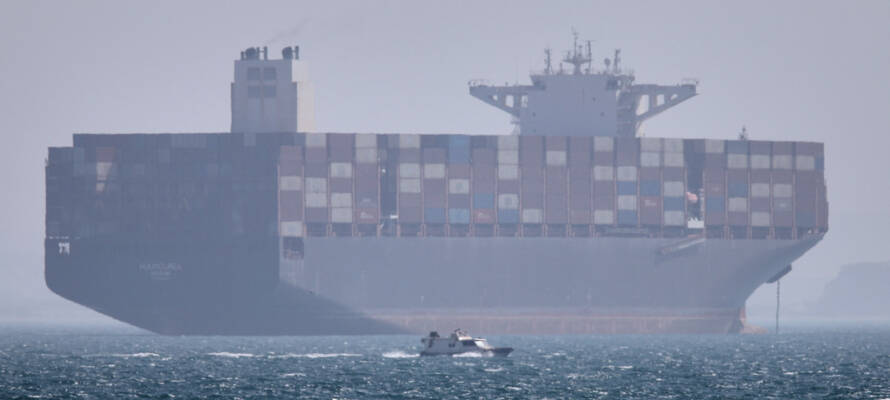
In Israel, officials signaled readiness for rapid escalation.
By United with Israel Staff
The fragile ceasefire between the United States and Iran appeared increasingly at risk Tuesday as Iranian officials escalated their rhetoric and a series of military incidents in and around the Strait of Hormuz pointed to a growing likelihood of renewed conflict.
In a post on X Tuesday morning, Iranian parliament speaker Mohammad Bagher Ghalibaf issued a stark warning over the situation in the strategic waterway, writing that “the new equation of the Strait of Hormuz is taking shape.”
He added that “the security of shipping and the transfer of energy is under threat due to the violation of the ceasefire and the imposition of a blockade by America and its allies,” and cautioned that “the continuation of the current situation is not tolerable for America, while we have not even begun yet.”
The remarks signaled a sharp escalation in tone from Tehran and came as clashes at sea intensified. The U.S. military confirmed it engaged Iranian forces on Monday, sinking six small boats that were targeting civilian vessels as part of efforts to reopen the Strait of Hormuz.
Two U.S. Navy destroyers transited the strait under what officials described as a sustained barrage involving missiles, drones, and swarming small boats, according to CBS News. Both vessels were supported by fighter jets and Apache helicopters and were able to intercept or deter all incoming threats.
At the same time, Iran expanded its attacks beyond the maritime arena. In the United Arab Emirates, air defense systems intercepted 12 ballistic missiles, three cruise missiles, and four drones launched from Iran, according to the Emirati defense ministry.
The attack marked the first direct strike on the Gulf state since the ceasefire took hold in early April. A fire broke out in Fujairah following the strike, leaving three people injured. A source told CNN that an Israeli-deployed Iron Dome system was involved in intercepting some of the incoming threats.
Despite the escalation, President Trump appeared to downplay the severity of the incidents. In remarks to ABC News, he described the exchange as “not heavy firing” and said most of the Iranian projectiles were intercepted.
“One got through. Not huge damage,” he said. However, earlier in the day, Trump issued a stark warning in an interview with Fox News, saying Iran would be “blown off the face of the Earth” if it attacked U.S. vessels.
In Israel, officials signaled readiness for a rapid escalation. A senior source told Israel’s Channel 14 that “Israel is prepared to return to fighting immediately in Iran” and is “just waiting for a green light from the Americans.”
The IDF Home Front Command remains on high alert, though authorities emphasized there has been no change in civilian guidelines and daily life continues as normal. Military officials stressed that air defense systems and offensive capabilities remain at elevated readiness, unchanged since the ceasefire was declared.
The convergence of intensified Iranian threats, direct attacks on U.S. and allied assets, and rising military preparedness across the region suggests the ceasefire is under significant strain.
With both rhetoric and operational activity escalating, officials increasingly warn that a return to broader conflict is becoming a real and immediate possibility.
Do You Love Israel? Make a Donation - Show Your Support!

Donate to vital charities that help protect Israeli citizens and inspire millions around the world to support Israel too!
Now more than ever, Israel needs your help to fight and win the war -- including on the battlefield of public opinion.
Antisemitism, anti-Israel bias and boycotts are out of control. Israel's enemies are inciting terror and violence against innocent Israelis and Jews around the world. Help us fight back!

