 Français
 Español
 English
 Portuguese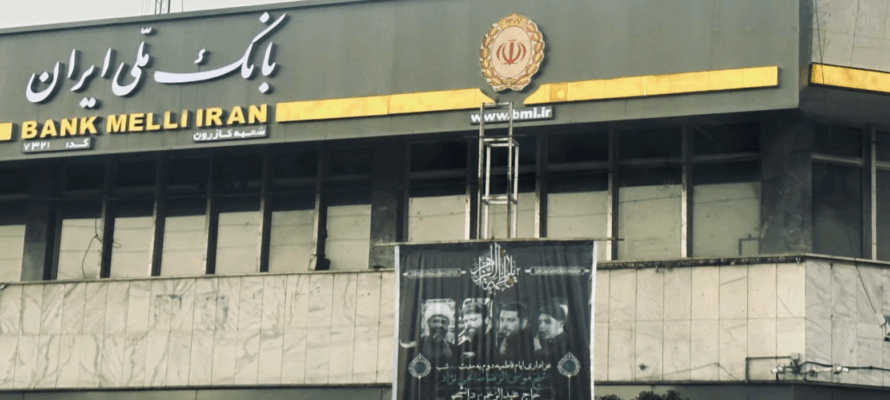
At least five other banks, including Sarmayeh, Day, Sepah, Iran Zamin, and Melal, are also reportedly facing similar solvency crises amid renewed international sanctions.
By Jewish Breaking News Staff
Panic erupted across Tehran on Saturday after one of Iran’s largest private financial institutions officially declared bankruptcy.
Founded in 2012, Ayandeh Bank operated more than 270 branches nationwide, including 150 in Tehran, and held billions in savings for ordinary Iranians and small businesses. According to Iranian state media, the bank had accumulated $5.2 billion in losses and $2.9 billion in debt before regulators stepped in
Officials blamed the bankruptcy on years of corrupt self-dealing and reckless lending, with more than 90 percent of Ayandeh’s funds tied to projects run by its own affiliates. Central Bank Deputy Governor Farshad Mohammadpour said the bank’s conduct had created “a false and dangerous image of the entire banking system.”
Analysts estimate Ayandeh’s bad loans amount to nearly 2 percent of Iran’s GDP, much of it linked to politically connected firms. As a result, the Central Bank of Iran has ordered all Ayandeh assets, branches, and accounts transferred to the state-owned Bank Melli.
With crowds forming outside shuttered branches and riot police deployed, Economy Minister Ali Madanizadeh urged calm, insisting that “customers have nothing to worry about,” while Central Bank Governor Mohammad Reza Farzin said deposits up to 100 million rials (about $200) would be fully insured and larger sums repaid gradually through Bank Melli.
At least five other banks, including Sarmayeh, Day, Sepah, Iran Zamin, and Melal, are also reportedly facing similar solvency crises amid renewed international sanctions following the failure of nuclear-deal talks and subsequent Israeli and U.S. strikes on Iranian nuclear sites.
Washington recently revoked India’s waiver for operations at Iran’s Chabahar Port, giving Indian firms until mid-November to exit or face penalties. Only ten Iranian banks now meet the minimum 8 percent capital-adequacy ratio.
In an attempt to stabilize the currency, Iran’s parliament plans to remove four zeroes from the rial, effectively revaluing it so that one new rial equals 10,000 old rials. However, economists warn the measure may simplify accounting but will not restore confidence in a financial system shaken by hyperinflation, 40% consumer-price increases, and youth unemployment above 25 percent.
Do You Love Israel? Make a Donation - Show Your Support!

Donate to vital charities that help protect Israeli citizens and inspire millions around the world to support Israel too!
Now more than ever, Israel needs your help to fight and win the war -- including on the battlefield of public opinion.
Antisemitism, anti-Israel bias and boycotts are out of control. Israel's enemies are inciting terror and violence against innocent Israelis and Jews around the world. Help us fight back!

