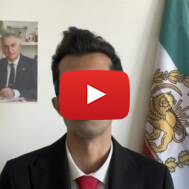
Rayan Amiri, an Iranian opposition leader, fled to Turkey after filming violent crackdowns on anti-regime protests and now advocates replacing Islamist rule with secular nationalism.
The idea that Iran's beleaguered people will suddenly, somehow, with no weapons whatsoever, magically rise up and take back their country from a regime armed to the teeth and with a rich record of mass murder is beyond delusional.
Universities produce skilled labor and future administrators, but they also concentrate young people with time, grievances, and the capacity to organize.
Having survived wars, sanctions, and internal unrest for nearly half a century, it calculates that patience can defeat even the most determined external pressure.
Tehran has carefully weighed the risk of a U.S. military strike against Trump’s demands and concluded that it cannot afford to give up its missile arsenal or its capacity for regional disruption.
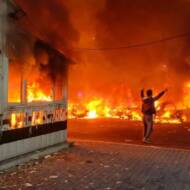
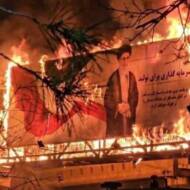
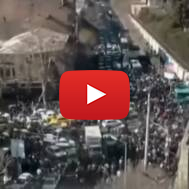
As Iran’s internet blackout drags on, reports are slowly emerging of widespread violence and mass killings across the country—prompting messages of support from Iranian Jews living in Israel.
Iranian-born William Mehrvaz explains how Iran’s regime is violently crushing nationwide protests through mass killings, arrests, and total communication blackouts.
Rita Jahan-Farouz, the iconic Jewish Persian-Israeli artist, delivered a message to the Iranian people voicing her solidarity as nationwide protests continue to shake the regime.
As the U.S. quietly pulls back from bases and Israel ramps up readiness, signs point to a looming U.S. decision on Iran—while leaving the world guessing if, when, or how a strike might hit.
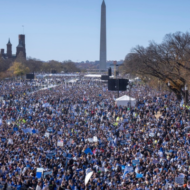
The same audience that turned out in the tens of thousands to protest the war in the Gaza Strip or to broadcast their identification with Palestinians has zero interest in the Iranian struggle.
If large numbers of protesters are killed and the rest retreat to their homes, the Islamic Republic will survive once again and turn to revenge—both against its people and against its regional adversaries.
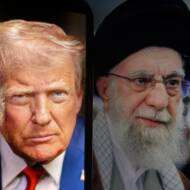
After eight consecutive days of nationwide protests in Iran, President Trump vowed to protect demonstrators from the oppressive regime, marking a significant step in supporting innocent citizens as they seek to reclaim their country.
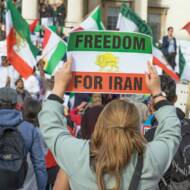
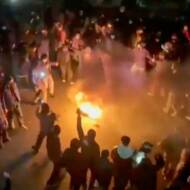
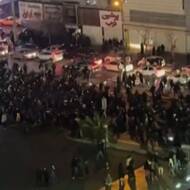
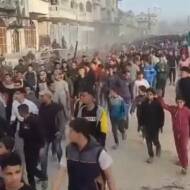
For three straight days, Iran has seen protests across multiple cities, with citizens increasingly upset over rising inflation, deteriorating living conditions, and the regime’s systemic oppression.
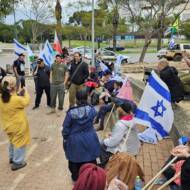
Massive protests in Berlin and Brussels condemn rising antisemitism post-Hamas pogroms, with leaders emphasizing the urgent need to stand against bigotry.
"There is no example in the world of a sweeping reasonableness standard which completely replaces the discretion of the elected echelon," says Minister Yariv Levin.
'I call on all the demonstrators, on the right and the left, to behave responsibly and not to act violently. We are brothers,' the prime minister said.
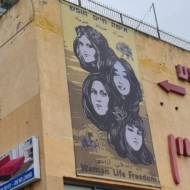
The mural features four women who were killed by Iran, including Mahsa Amini whose death in September 2022 sparked nation-wide anti-government protests.
 Français
 Español
 English
 Portuguese