 Français
 Español
 English
 Portuguese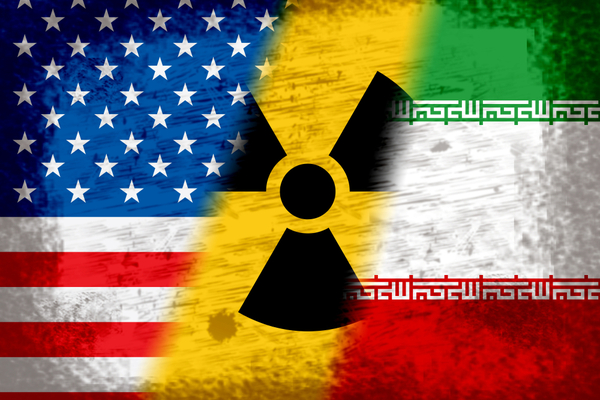
The US and Iran are slated to hold a second round of talks on Tuesday in Geneva, following a summit in Muscat, Oman, earlier this month.
By World Israel News
Tehran has signaled its willingness to compromise in nuclear talks with the United States while emphasizing that it will not agree to a complete ban on uranium enrichment.
On Sunday, the BBC published an interview with Iranian Deputy Foreign Minister Majid Takht-Ravanchi, who told the British broadcaster that it is now up to the Trump administration “to prove that they want to do a deal.”
“If they are sincere, I’m sure we will be on the road to an agreement,” Takht-Ravanchi said.
Iran, Takht-Ravanchi continued, is prepared to limit the level of uranium enrichment it pursues, noting that the regime has offered to dilute its stockpile of 60% enriched uranium.
This concession, however, would only be made in the context of comprehensive sanctions relief, he added.
“We are ready to discuss this and other issues related to our program if they are ready to talk about sanctions.”
Takht-Ravanchi completely ruled out past American demands that Iran agree to halt all uranium enrichment activities and seemed to suggest that the Trump administration had dropped one of its core demands.
“The issue of zero enrichment is not an issue anymore and as far as Iran is concerned, it is not on the table anymore.”
However, President Donald Trump told reporters on Friday that the US is still seeking a total cessation of enrichment operations.
“We don’t want any enrichment,” Trump said.
A day later, Secretary of State Marco Rubio said at the Munich Security Conference that President Trump prefers to “reach a deal with Iran,” while acknowledging that it will be “very hard to do.”
The US and Iran are slated to hold a second round of talks on Tuesday in Geneva, following a summit in Muscat, Oman, earlier this month.
Takht-Ravanchi also claimed in the interview that the Trump administration has dropped its demands that talks address other issues beyond Iran’s nuclear program, including its ballistic missile production and support for terrorist proxy groups.
“Our understanding is that they have come to the conclusion that if you want to have a deal you have to focus on the nuclear issue.”
Claiming Iran’s missile program is primarily “defensive,” Takht-Ravanchi said Tehran is unwilling to enter into talks regarding its development or production of ballistic missiles.
“When we were attacked by Israelis and Americans, our missiles came to our rescue so how can we accept depriving ourselves of our defensive capabilities.”
Do You Love Israel? Make a Donation - Show Your Support!

Donate to vital charities that help protect Israeli citizens and inspire millions around the world to support Israel too!
Now more than ever, Israel needs your help to fight and win the war -- including on the battlefield of public opinion.
Antisemitism, anti-Israel bias and boycotts are out of control. Israel's enemies are inciting terror and violence against innocent Israelis and Jews around the world. Help us fight back!

