 Français
 Español
 English
 Portuguese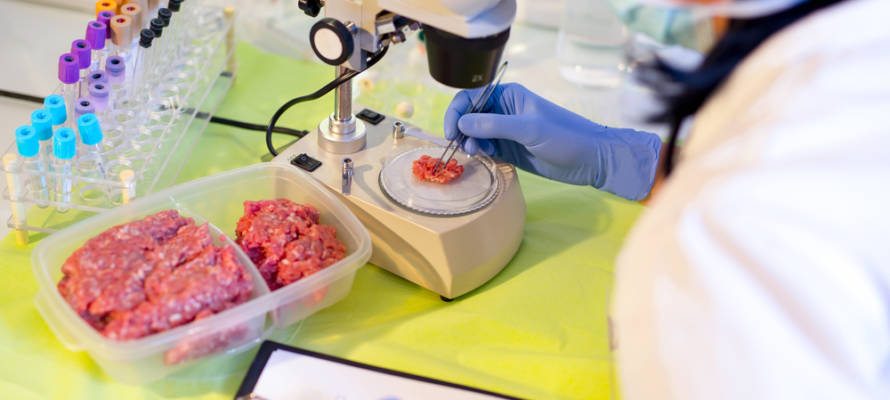
Scientists in the field have long considered this technology essential to making lab-grown beef affordable and scalable.
By Shula Rosen
Israeli researchers say they have reached a milestone that could dramatically shift how cultured beef is produced, reporting that they succeeded in getting cow cells to renew themselves indefinitely without using genetic engineering.
The announcement, made by Hebrew University and the food-tech firm Believer Meats, describes a development that scientists in the field have long considered essential to making lab-grown beef affordable and scalable.
The findings, published in Nature Food, detail a lengthy experiment in which bovine cells from Holstein and Simmental cattle were cultured for more than 500 days.
The team, led by Prof. Yaakov Nahmias, said the cells slowed down after several months and began to show typical signs of aging. But after roughly 240 generations, a small group of cells unexpectedly began dividing normally again, maintaining consistent growth without turning cancerous.
Molecular tests linked this shift to the non-Gnatural activation of two enzymes—telomerase and PGC1α—that appear to help the cells repair worn-down structures and regain stable function.
The study notes that similar effects had been observed in chicken cells previously, but attempts to reproduce this process in cattle have traditionally required altering genes such as TP53 or TERT. “Spontaneously immortalized cell lines provide an essential, non-transformed resource for cultivated meat production,” the scientific summary explains.
Dr. Elliot Swartz of the Good Food Institute told Ynet the work provides a potential “roadmap” for establishing long-lasting, non-GMO cell lines across multiple species used in food production.
The implications could be significant for companies trying to clear regulatory barriers.
Many agencies insist that cultured meat originate from non-engineered cells, a requirement that has added years of delay to beef-based products, especially in Europe. Stable cell lines also reduce the need to repeatedly source material from live animals, a key factor in lowering production costs.
The breakthrough comes as governments view cultivated meat as part of broader food security strategies. Israel has already approved the commercial sale of cultivated beef from Aleph Farms, while China and other countries have invested in alternative protein technologies. Researchers say that if these cell lines can support large-scale manufacturing, cultured beef may eventually become a routine product rather than a niche experiment.
Do You Love Israel? Make a Donation - Show Your Support!

Donate to vital charities that help protect Israeli citizens and inspire millions around the world to support Israel too!
Now more than ever, Israel needs your help to fight and win the war -- including on the battlefield of public opinion.
Antisemitism, anti-Israel bias and boycotts are out of control. Israel's enemies are inciting terror and violence against innocent Israelis and Jews around the world. Help us fight back!

