 Français
 Español
 English
 Portuguese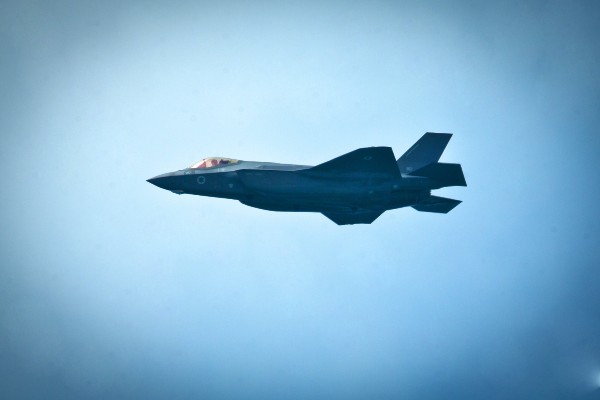
The U.S. military, once wary of country-specific modifications, has since studied several sraeli concepts.
By Shula Rosen
A decade ago, Israel’s request to modify the U.S.-built F-35 fighter jet was dismissed in Washington as too risky, too complex, and potentially harmful to the world’s most expensive military program.
Today, many of those same upgrades are seen as some of the most significant advances ever made to the aircraft.
The debate began in the early 2010s, when Israeli defense officials argued that the standard F-35 could not meet the country’s unique operational needs.
Iran’s nuclear sites and key military facilities sit far beyond the jet’s original range, and aerial refueling—always a vulnerable point in long-distance missions—was considered too risky in a confrontation with advanced Iranian missile systems.
Israel, therefore, pushed for changes that the Pentagon initially refused: a fully customized electronic warfare system, the ability to integrate Israeli weapons, and dramatic increases in fuel capacity.
U.S. officials warned that altering the jet’s core systems could compromise its stealth features and drive up costs across the entire international program.
After months of negotiations, the Pentagon agreed in 2011 to a limited path forward, allowing Israeli modifications as long as they were reviewed by Lockheed Martin and tested to ensure the aircraft’s basic design remained intact. Israeli engineers and defense companies then began the long process of redesigning the jet to fit local demands.
The result was the F-35I “Adir,” equipped with a modular electronic warfare suite built by Elbit Systems, extended-range fuel solutions, and an upgraded mission computer that allows rapid integration of new Israeli weapons.
These changes were intended to give pilots the ability to adapt quickly to new threats and operate deep into hostile airspace.
The real test came when Israel used its F-35Is operationally, including missions in Syria that defense officials say were carried out without detection by advanced air-defense systems.
Those flights demonstrated the value of the electronic warfare upgrades and fueled outside interest in Israel’s range-extending designs.
The U.S. military, once wary of country-specific modifications, has since studied several of the Israeli concepts. Analysts say the experience has reshaped thinking about the F-35 program: Instead of a one-size-fits-all aircraft, partner nations may increasingly seek solutions tailored to their own strategic conditions.
Israel now operates dozens of F-35Is and continues expanding its fleet, with its early gamble on controversial modifications widely viewed as a defining moment in the aircraft’s evolution.
Do You Love Israel? Make a Donation - Show Your Support!

Donate to vital charities that help protect Israeli citizens and inspire millions around the world to support Israel too!
Now more than ever, Israel needs your help to fight and win the war -- including on the battlefield of public opinion.
Antisemitism, anti-Israel bias and boycotts are out of control. Israel's enemies are inciting terror and violence against innocent Israelis and Jews around the world. Help us fight back!

