 Français
 Español
 English
 Portuguese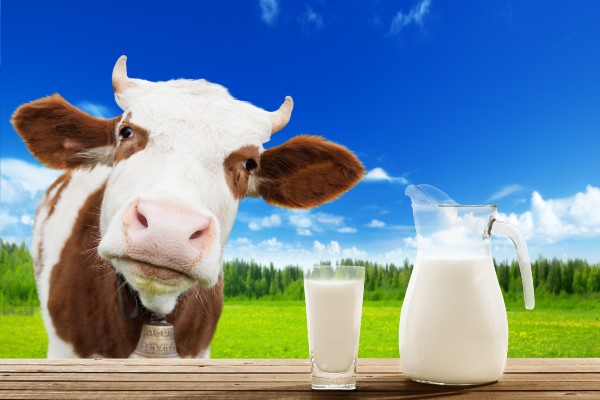
Israeli cows are among the highest-yielding in the world, with some farms producing over 14,000 liters of milk per cow annually.
By Shula Rosen
A groundbreaking international study has revealed that just a single day of extreme heat can cause dairy cows to produce up to 10% less milk—an impact that can persist for more than 10 days.
The findings, published in Science Advances, stress the growing threat climate change poses to global food systems and highlight the limited effectiveness of current cooling strategies, even on highly advanced farms.
Among the researchers leading the study is Prof. Ayal Kimhi of Hebrew University’s Robert H. Smith Faculty of Agriculture, Food and Environment in Rehovot.
Kimhi, also vice president of the Shoresh Institution for Socioeconomic Research, played a key role in analyzing data from Israeli dairy farms—considered among the most productive and technologically sophisticated in the world.
“This research shows how vulnerable even the best-managed dairy systems are to heat stress,” co-author Asst. Prof. Eyal Frank of the University of Chicago’s Harris School of Public Policy told The Jerusalem Post.
“Climate change will have wide-ranging impacts on what we eat and drink, including that cold glass of milk. Our study found that even state-of-the-art adaptation strategies may fall short under rising global temperatures.”
The study, titled “High-Frequency Data Reveal Limits of Adaptation to Heat in Animal Agriculture,” is one of the most comprehensive evaluations to date of how heat affects livestock productivity.
Using granular, high-frequency data from Israel’s dairy industry, researchers tracked milk yields across varying climates and technologies, finding that heat not only suppresses production immediately but also has lingering effects long after temperatures drop.
Israel’s dairy sector offered an ideal case study. Its farms operate across a range of microclimates and use advanced cooling systems, yet the study found these measures often failed to prevent losses during extreme heat.
Israeli cows are among the highest-yielding in the world, with some farms producing over 14,000 liters of milk per cow annually—far surpassing counterparts in Denmark and Estonia.
The research team also included scholars from Tel Aviv University, the Israel Cattle Breeding Association, and the University of Chicago, reflecting a global effort to understand and mitigate climate-related risks to food security.
Do You Love Israel? Make a Donation - Show Your Support!

Donate to vital charities that help protect Israeli citizens and inspire millions around the world to support Israel too!
Now more than ever, Israel needs your help to fight and win the war -- including on the battlefield of public opinion.
Antisemitism, anti-Israel bias and boycotts are out of control. Israel's enemies are inciting terror and violence against innocent Israelis and Jews around the world. Help us fight back!

