 Français
 Español
 English
 Portuguese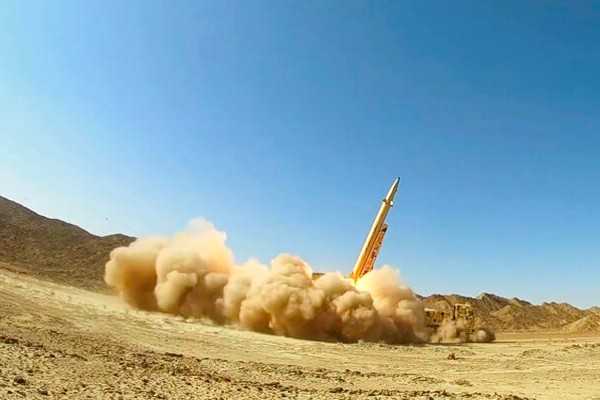
Godiner also warned that fragments created when bombs explode can travel in unpredictable directions.
By Shula Rosen
Israel’s home front is facing repeated ballistic missile barrages from Iran as part of Operation Roaring Lion, with officials warning that cluster munitions used in the attacks pose serious risks to civilians across the country.
Former Fire and Rescue Authority commander Aaron Godiner addressed the dangers in a Sunday interview with Maariv, explaining that cluster munitions break apart while descending and spread smaller explosives over large areas.
“Cluster bombs break up in the air at high altitudes and crash over kilometers in wide radii,” warned Aaron Godiner, the former commander of the Fire and Rescue Authority of Ramat Gan-Givatayim.
The weapons split into smaller bombs that fall over a broad area before detonating. Each of the smaller explosives weighs between three and five kilograms and can cause major destruction when they explode.
“When the smaller bombs, each weighing between three and five kilograms, explode, they cause severe damage,” he explained. “This damage can range from the destruction of residential apartments if they fall in populated areas, to the destruction of vehicles if they are hit directly, or significant damage from fires and craters on the roads.”
Godiner said the extent of the destruction depends on where the explosives land and how they strike structures.
“In single-story buildings,” he added, “they can cause collapse and significant internal damage, but in residential buildings, the extent of the damage depends on where the cluster bomb falls and at what angle.”
He also warned that fragments created when bombs explode can travel in unpredictable directions.
“This is one of the reasons the Home Front Command specifically urges the public not to approach or touch what looks like fragments or interception debris, to move other people away, and to call the police,” he emphasized.
Godiner cautioned drivers about how to respond to rocket sirens, noting that many motorists stop under bridges when alerts sound.
“When drivers stop their cars on various roads after hearing a warning, they often pull over under the nearest bridge. Home Front Command has warned against this.”
“Some bridges have construction standards that are not the strongest,” he explained, adding that drivers should leave their vehicles, move to a safer spot along the road, lie down and protect their heads.
He also warned about interception debris from Israeli air defense systems.
“Cluster bombs are relatively small, but Iron Dome interception fragments are much larger and heavier, and the fragments come in different sizes,” he cautioned. “Do not approach them. It’s important to stay away and call the police.”
“The danger doesn’t disappear after the interceptions and the reassurance that it’s safe to leave protected areas,” he concluded. “It’s essential to check the surrounding area for suspicious objects, such as fragments, interception parts, and cluster bombs.”
Do You Love Israel? Make a Donation - Show Your Support!

Donate to vital charities that help protect Israeli citizens and inspire millions around the world to support Israel too!
Now more than ever, Israel needs your help to fight and win the war -- including on the battlefield of public opinion.
Antisemitism, anti-Israel bias and boycotts are out of control. Israel's enemies are inciting terror and violence against innocent Israelis and Jews around the world. Help us fight back!

