 Français
 Español
 English
 Portuguese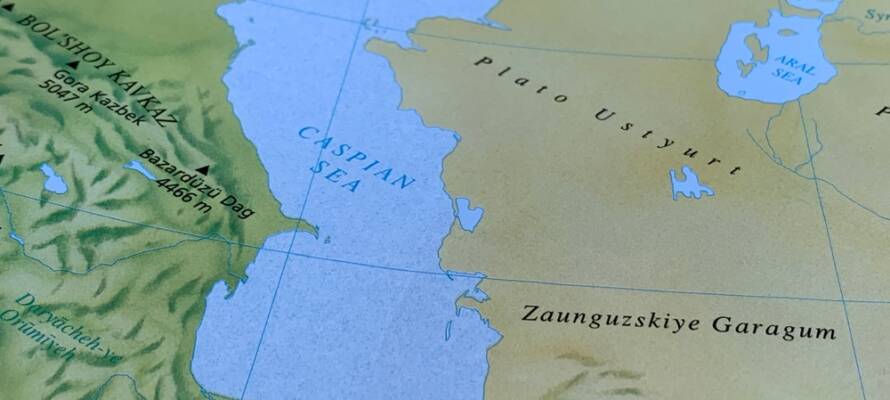
As a closed body of water accessible only to its bordering countries, it is far more difficult to monitor than open seas.
By United with Israel Staff
An Israeli strike on Iran’s Caspian Sea coast is drawing renewed attention to a largely overlooked supply route linking Tehran and Moscow, as Iran works to rebuild its military capabilities.
According to a report by The New York Times, Israeli fighter jets struck the port of Bandar Anzali earlier this year, targeting a naval command center and several vessels tied to Iran’s maritime operations.
The strike, carried out far from the Persian Gulf, highlighted the growing importance of the Caspian Sea in the current conflict.
In recent months, the waterway has quietly become a key channel for cooperation between Iran and Russia.
U.S. officials say Moscow has been transferring drone components and other equipment through the route, helping Tehran restore capabilities that were significantly degraded during the war.
The shift reflects a broader adjustment by both countries as traditional routes have come under pressure.
With the Strait of Hormuz facing disruptions and heightened scrutiny, Russia has increasingly redirected shipments northward, including goods that would typically pass through the Gulf.
Trade activity along the Caspian corridor has risen steadily. Analysts point to a growing volume of cargo moving between Russian and Iranian ports, including grain and other essential supplies.
Iranian officials have acknowledged that ports along the Caspian coast are now operating around the clock to handle incoming shipments.
The route is also part of a wider effort to develop alternative trade corridors that bypass Western-controlled shipping lanes, allowing both countries to sustain economic and military flows despite sanctions.
For Western powers, the Caspian presents a unique challenge. As a closed body of water accessible only to its bordering states, it is far more difficult to monitor than open seas.
Maritime tracking groups have reported that vessels traveling between Russia and Iran often disable their tracking systems, further limiting visibility.
Analysts say the Israeli strike was likely aimed at disrupting this evolving network and signaling that Israel is prepared to act beyond traditional arenas to counter efforts to rebuild Iran’s military strength.
The developments underscore how supply chains and logistics routes are playing an increasingly central role in the conflict, shaping the balance of power even far from the main front lines.
Do You Love Israel? Make a Donation - Show Your Support!

Donate to vital charities that help protect Israeli citizens and inspire millions around the world to support Israel too!
Now more than ever, Israel needs your help to fight and win the war -- including on the battlefield of public opinion.
Antisemitism, anti-Israel bias and boycotts are out of control. Israel's enemies are inciting terror and violence against innocent Israelis and Jews around the world. Help us fight back!

