 Français
 Español
 English
 Portuguese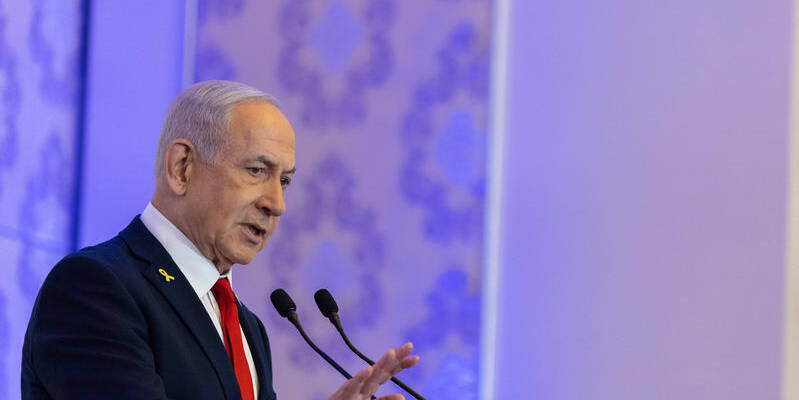
The announcement comes amid heightened international scrutiny of weapons transfers to Israel and growing concern in Jerusalem that future conflicts could be constrained by political or legal limits imposed by allies.
By Shula Rosen
Israeli Prime Minister Benjamin Netanyahu announced a sweeping 350 billion-shekel ($110 billion) initiative aimed at building a largely self-sufficient domestic arms industry over the next decade, a move intended to sharply reduce Israel’s dependence on foreign military suppliers, including the United States, Reuters reports.
Netanyahu unveiled the plan during a ceremony welcoming new Israeli Air Force pilots, linking battlefield readiness with industrial independence. He said the goal was to manufacture weapons “as much as possible in Israel,” while continuing to procure certain critical systems and components from abroad.
The scale of the investment marks the largest defense-industrial commitment in Israel’s history and signals a strategic shift away from a security model that has long relied on close integration with US and other Western arms suppliers.
The announcement comes amid heightened international scrutiny of weapons transfers to Israel and growing concern in Jerusalem that future conflicts could be constrained by political or legal limits imposed by allies.
Israeli officials view the push for expanded domestic production as a way to preserve operational freedom, reduce exposure to external pressure, and safeguard supply chains during prolonged or multi-front conflicts. Greater reliance on locally produced systems could also allow for tighter control over sensitive technologies and operational secrecy.
At the same time, the initiative could reshape aspects of Israel’s defense relationships. A reduction in foreign procurement, particularly from the United States, may affect long-standing patterns of military coordination and purchasing, including high-profile platforms such as advanced fighter aircraft.
While the plan does not call for a rupture with allies, it reflects a desire to rebalance Israel’s security posture toward greater autonomy.
Supporters of the initiative argue that the investment could further strengthen Israel’s position as a leading global defense exporter, especially in fields where it already holds advantages, including unmanned systems, missile defense, and cyber capabilities. Accelerated domestic development in these areas could generate technological spillovers and long-term economic benefits.
Critics, however, caution that committing such a vast sum to defense industrialization may divert resources from other national priorities and could contribute to regional tensions if neighboring states respond by expanding their own military programs.
The plan’s success will depend on sustained funding, industrial capacity, and the ability to translate investment into reliable, scalable production. If realized, it would represent a fundamental reconfiguration of Israel’s defense strategy, anchoring military power more firmly within its own industrial base.
Do You Love Israel? Make a Donation - Show Your Support!

Donate to vital charities that help protect Israeli citizens and inspire millions around the world to support Israel too!
Now more than ever, Israel needs your help to fight and win the war -- including on the battlefield of public opinion.
Antisemitism, anti-Israel bias and boycotts are out of control. Israel's enemies are inciting terror and violence against innocent Israelis and Jews around the world. Help us fight back!

