 Français
 Español
 English
 Portuguese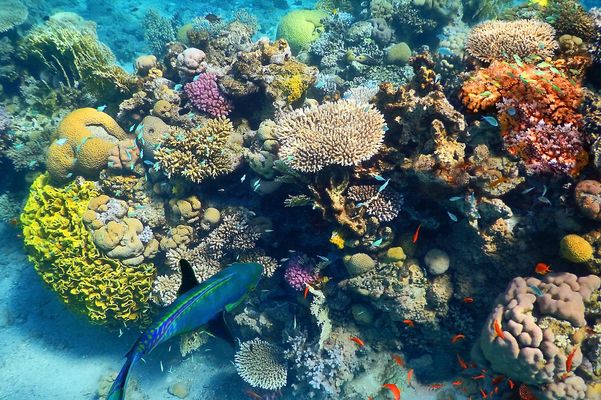
Once established, the researchers relocated the enriched tiles to a reef six kilometers away that had suffered extensive damage.
By Shula Rosen
Israeli and Australian researchers have developed a new reef-restoration method that produced striking gains in coral health, offering a potential lifeline for marine ecosystems collapsing under climate stress.
The technique, known as the coral reef ecosystem transplant, or aCRET, was tested by a joint team from Bar-Ilan University, the Technion, James Cook University, and the Australian Institute of Marine Science, and the findings were published in Nature Communications.
The project centered on whether a living, intact reef community could revive a degraded one. To test the idea, the team crafted terracotta structures modeled on the complex contours of natural reefs. These tiles were seeded for six months on a thriving reef until they accumulated invertebrates, microorganisms, and other biological elements that support coral vitality.
Once established, the researchers relocated the enriched tiles to a reef six kilometers away that had suffered extensive damage.
Corals from the deteriorated site were secured onto the healthy substrate, allowing scientists to track whether the biological foundation of a robust reef could compensate for stress in compromised corals.
Corals transferred to these prepared tiles showed stronger photosynthetic performance, an increase in symbiotic algae, and lower signs of physiological strain.
Trials that attempted the reverse—moving damaged-reef substrate into a healthy setting—yielded weaker results, reinforcing the importance of transplanting entire functioning ecosystems rather than isolated components.
Researchers emphasized that the approach is relatively affordable and adaptable to various coastal regions, making it feasible even for conservation programs with limited resources. They cautioned, however, that selecting nearby healthy reefs for transplantation is essential to maximize success and that longer monitoring is needed to measure broader ecological outcomes.
As reefs worldwide continue to deteriorate due to warming oceans and pollution, the study offers a practical model for large-scale revival efforts. The Israeli-Australian team sees the method as a pathway to preserving biodiversity in one of the planet’s most vulnerable environments and an example of how innovative science can help protect global marine life.
Do You Love Israel? Make a Donation - Show Your Support!

Donate to vital charities that help protect Israeli citizens and inspire millions around the world to support Israel too!
Now more than ever, Israel needs your help to fight and win the war -- including on the battlefield of public opinion.
Antisemitism, anti-Israel bias and boycotts are out of control. Israel's enemies are inciting terror and violence against innocent Israelis and Jews around the world. Help us fight back!

