 Français
 Español
 English
 Portuguese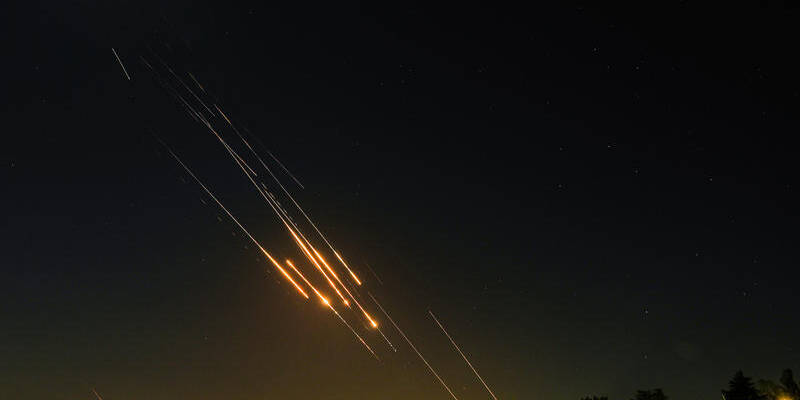
The cover of night serves as a form of camouflage, shielding the fueling and preparation of launch systems from satellites, drones, and other detection technologies.
By Eliana Fleming, JFeed
As Israeli civilians brace for several more difficult days ahead, one disturbing pattern has become increasingly clear: most of the missile attacks launched by Iran are occurring during the night.
While daytime hours often feel deceptively “normal,” the night-time descends into chaos, with sirens blaring, missiles flying, and countless families seeking shelter in fear.
This contrast between day and night has become a defining feature of the ongoing confrontation.
There are several strategic and logistical reasons why Iran and its proxy forces choose to launch the majority of their missile barrages during the night.
First and foremost is the nature of the weaponry being used. The missiles fired at Israel are typically long-range and heavy, and many of them are powered by enriched jet fuel.
This specialized fuel is not only costly but also a scarce resource for Iran, which is currently suffering a major energy crisis.
Because of the complexity of the fuelling process, each missile must be carefully and slowly prepared before launch, a procedure that exposes the launch site to detection by Israeli surveillance and targeting systems.
Darkness offers critical protection for these operations.
The cover of night serves as a form of camouflage, shielding the fueling and preparation of launch systems from satellites, drones, and other detection technologies.
In addition to the tactical benefits, there are psychological and humanitarian factors at play.
Iran’s missile strategy is deliberately aimed at civilian populations, and night-time attacks have a greater chance of causing disruption and panic.
After enduring a full day of anxiety and uncertainty, people are naturally more vulnerable and less alert at night. Families are trying to sleep, children are at home, and communities are at their most unguarded.
Launching salvos during these hours maximizes psychological impact and compounds the exhaustion of the civilian population.
While the majority of missile fire is concentrated during the night-time hours, daytime attacks are by no means off the table.
Iran retains the capability to strike at any time, and daytime launches do occasionally occur, especially in response to specific developments or retaliatory strikes.
Still, the prevailing strategy remains clear: use the darkness to protect offensive operations and exploit civilian vulnerability.
For the Israeli public, this means another series of sleepless nights, as the country endures an unprecedented wave of long-range, high-impact attacks from a hostile regime operating under the veil of night.
Do You Love Israel? Make a Donation - Show Your Support!

Donate to vital charities that help protect Israeli citizens and inspire millions around the world to support Israel too!
Now more than ever, Israel needs your help to fight and win the war -- including on the battlefield of public opinion.
Antisemitism, anti-Israel bias and boycotts are out of control. Israel's enemies are inciting terror and violence against innocent Israelis and Jews around the world. Help us fight back!

