
Private messages later leaked from Iranian officials captured a sense of panic: “Where is our air defense?” one asked, as radar stations and missile sites went dark under repeated Israeli strikes.
When Israeli jets roared toward Iran in the opening hours of Operation Rising Lion, they weren’t flying into the unknown. In the background sat a dense, mostly invisible intelligence machine that had spent months mapping every radar, missile launcher and command node the Islamic Republic thought it could hide.
That “kill web” is what Israeli officials, speaking via N12 and reported by the Jerusalem Post, are now describing in far greater detail – and it’s also why they warn the next round with Iran is only a matter of time.
The June Twelve-Day War began with a preemptive Israeli strike on Iran’s nuclear and missile infrastructure, followed by massive Iranian salvos of missiles and suicide drones at Israeli cities and strategic sites.
Open sources estimate that more than a thousand people were killed in Iran by Israeli strikes, while a few dozen Israelis were killed by Iranian barrages, despite intensive air and missile defense. With the US entering the campaign later and hitting several nuclear sites of its own, the war turned into a real-time stress test of each side’s intelligence, air defenses and long-range strike power.
At the heart of Israel’s performance was a tightly integrated system tying together the IDF Intelligence Directorate, Mossad networks inside Iran, cyber and signals intelligence, satellites, UAVs and the IAF’s underground command centers.
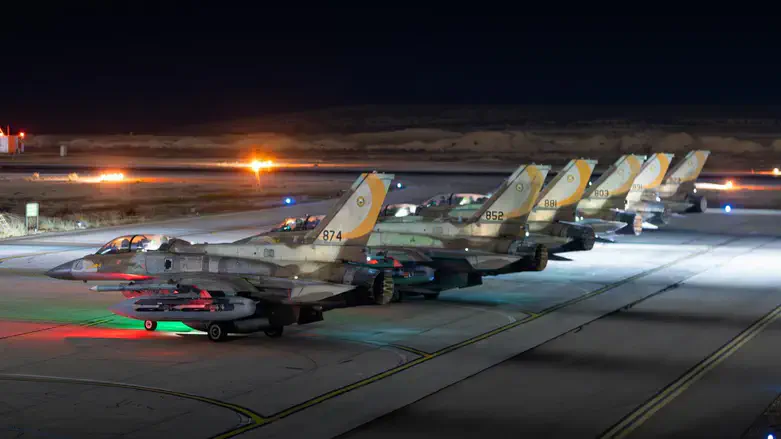
According to an official IDF release, IAF jets – “guided by precise intelligence from the Intelligence Directorate” – carried out a large-scale strike on Iran’s aerial defense array in western Iran, destroying dozens of radars and surface-to-air missile launchers in a single coordinated wave. That first blow opened corridors in the sky and made later sorties into Iran far less risky for Israeli pilots.
Independent assessments since the war suggest the scale of the damage was enormous. One conflict-monitoring group cites IDF figures that around 70 Iranian air defense batteries were taken out over the course of the campaign, while other reporting says roughly a third of Iran’s ballistic missile launchers were destroyed, sharply reducing the intensity of Tehran’s strikes on Israel as the days went on.
In practical terms, that meant the intel machine was doing exactly what it was built to do: constantly detect new threats, classify them, push targets to aircraft and drones in near-real time, and then re-task assets as fresh launchers and radars lit up or tried to move.
Part of the shock for Iran came from inside its own borders. Open-source reporting and Israeli officials have described how Israeli operatives smuggled drones and precision weapons into Iran ahead of time, using them to sabotage key elements of the air defense network and missile infrastructure just as IAF jets crossed into action.
One Israeli account speaks of covert drone bases near Tehran used to blind radars. Another describes how dozens of senior officers and nuclear personnel were killed in the first hours of the operation, decapitating large parts of Iran’s command structure. Private messages later leaked from Iranian officials captured a sense of panic: “Where is our air defense?” one asked, as radar stations and missile sites went dark under repeated Israeli strikes.
For Israel, the objective wasn’t just to prove a point. It was to break, as much as possible, the specific military systems that threaten Israeli civilians – long-range missiles, drones, nuclear infrastructure and the air defenses that protect them.
Israeli and allied sources highlight that targeting focused on military assets and regime security organs, while Iran responded with large salvos at cities, industrial plants and even a hospital. The results were still painful on the Israeli home front, but the combination of aggressive offensive operations and layered missile defense kept the damage far below what Iran had hoped to inflict.
Officials now briefing Israeli media stress that the same intelligence system that won those twelve days has not been switched off. According to the N12-based reporting, the network built for Rising Lion continues to track how Iran is rebuilding its missile and air-defense arrays, watching for new launch sites, hardened command posts, underground facilities and foreign help – including technology flowing from Russia and North Korea.
Analysts at Israeli think tanks say Tehran is learning from its failures by dispersing launchers, investing in more modern radar, and experimenting with more complex missile salvos designed to stress Israeli defenses.
That is where the warning about a “renewed conflict” comes in. While the June war ended with a ceasefire, nothing about the underlying confrontation has really been resolved. Iran is still pursuing its missile and nuclear programs. Its proxy network from Yemen to Iraq remains active, and its leaders openly talk about erasing Israel, even after seeing how vulnerable their own systems were when Israeli intelligence and air power were unleashed.
Israeli officials, for their part, are signaling two things at once: confidence that they can once again gain air supremacy over Iran if forced into a rematch, and awareness that the next round will be harder because the enemy now knows how badly it was exposed.
The lesson from the N12 revelations is that air supremacy today isn’t about one dazzling strike; it is about a living, breathing web of sensors, analysts and pilots that has to stay one step ahead of an adversary as big and adaptive as the Iranian regime.
In June, that web allowed Israel to surprise Iran, tear open its defenses and dramatically blunt its ability to hit Israeli civilians. Keeping that edge – in intelligence, in technology and in the political will to act first when necessary – is what will decide how the next confrontation over Iran’s ambitions plays out.
Do You Love Israel? Make a Donation - Show Your Support!


Donate to vital charities that help protect Israeli citizens and inspire millions around the world to support Israel too!
Now more than ever, Israel needs your help to fight and win the war -- including on the battlefield of public opinion.
Antisemitism, anti-Israel bias and boycotts are out of control. Israel's enemies are inciting terror and violence against innocent Israelis and Jews around the world. Help us fight back!