
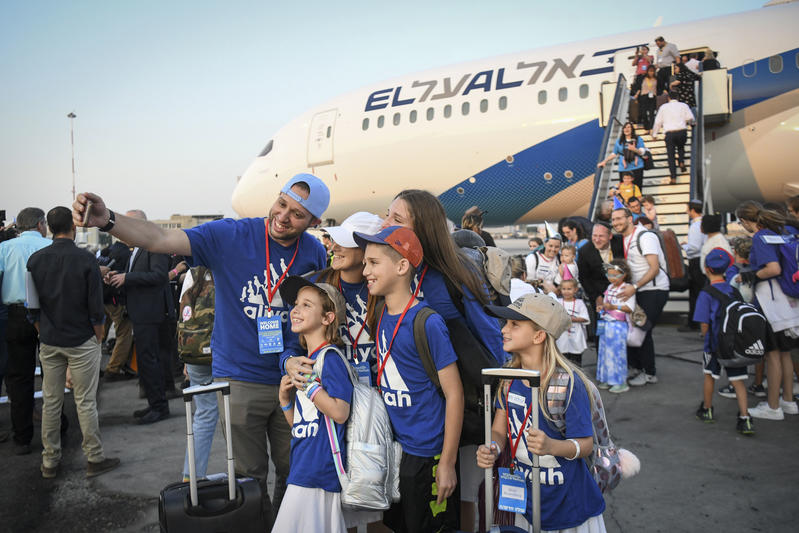
Aliyah has shown me, more than anything, how deeply we as Jewish people care for one another — even if we don’t fully know them yet.
By Ariella Gur, The Algemeiner
When I made Aliyah to Israel last September, I knew another war with Iran was possible. So, on February 28th, when we all woke up to sirens, I wasn’t shocked. But I was surprised at how quickly ballistic missile attacks became almost a normal, routine part of reality.
Even so, as attacks continued with multiple impacts near where I live in Tel Aviv, I was still so glad that I had moved to Israel. Despite everything going on, I still wish I had done it 10 years ago. Now that I am here, I can’t even remember the fears that held me back for so long.
Part of the reason I feel this way comes from the support and community I have built here in Tel Aviv, largely with olim, and specifically those who were on my Aliyah flight.
Nearly seven months later, a group of us from the flight, organized by Nefesh B’Nefesh, in partnership with the Ministry of Aliyah and Integration, the Jewish Agency for Israel, Keren Kayemeth LeIsrael, and Jewish National Fund-USA, are in touch almost daily in an online chat group.
The group was born out of what I call “the Israel effect,” the phenomenon of people gravitating toward each other, looking for ways to help or get to know new people.
This happens in bomb shelters, at the grocery store, in the street — and it happened on our flight.
Pretty immediately, I started talking to another olah who was sitting next to me on the plane. When we landed, we ended up in the airport waiting to complete the process of immigration with several other olim our age.
We discussed everything from where we were from to where we were going to live and work, to our reasons for moving across the world and our army processes. Because we were starting a similar chapter of life, the connection was natural.
Eleven of us opened a group chat that day called “Aliyah Buddies.” At first, our questions revolved around finding ulpans and learning how to settle bureaucratic matters like converting our drivers licenses.
Even though I had plenty of Israeli relatives on my father’s side of the family who were excited to accompany me to the Interior Ministry or the bank, this group was still a lifeline.
It was a place for us to put all of our worries, our doubts, and our struggles, and to be supported by the other people in the group who were experiencing the same problems.
We moved from practical matters to inviting people out to events, planning reunions, asking for help choosing LinkedIn pictures, and giving general life updates. No matter what time of day or what the topic was, there was always somebody willing to help, encourage, or commiserate.
“I love this chat,” one member wrote in the Fall after a fellow group member posted photos of a single friend looking for a relationship. Just recently, a friend in the group chat got engaged and invited us all to her engagement party.
Under missile fire, this feeling is amplified. Shortly after the war’s first sirens, someone posted “Everyone good?” with a heart emoji. That led to everyone checking in from places across the country, then discussing the Home Front Command’s system of early warnings, alerts, and all-clears.
In the weeks since, there have been constant check-ins along with photos from shelters, sharing fears and stress as well as more humorous stories about missile alerts interrupting showers.
In a post October 7th world, these connections are more meaningful to me, especially after I, like so many others, went through several friendship losses in the wake of the attacks.
Friends who I had known for years unfollowed me or blocked me without so much as a single word.
It doesn’t compare to what the State or people of Israel went through, but I definitely lost my spark for months, and felt guilty that I was living a safe, comfortable life in the Diaspora while so many were fighting and losing their lives here in Israel. Now, being here and building new communities like we’ve done in our group chat means everything to me.
Aliyah has shown me, more than anything, how deeply we as Jewish people care for one another — even if we don’t fully know them yet.
What I didn’t fully understand before I moved to Israel was the strength of the community here. The sense of camaraderie among immigrants, the way people show up for each other — it makes the challenges of building a life here seem doable.
Anyone considering aliyah should understand that coming to Israel doesn’t solve all of your problems. But I’m finally in the right place, the place that feeds my soul, and where everything comes together.
It is exhausting, frustrating and has challenged me in countless ways, but it is more amazing and fulfilling than I could have hoped — and at the end of the day, that’s what counts.
Do You Love Israel? Make a Donation - Show Your Support!


Donate to vital charities that help protect Israeli citizens and inspire millions around the world to support Israel too!
Now more than ever, Israel needs your help to fight and win the war -- including on the battlefield of public opinion.
Antisemitism, anti-Israel bias and boycotts are out of control. Israel's enemies are inciting terror and violence against innocent Israelis and Jews around the world. Help us fight back!