
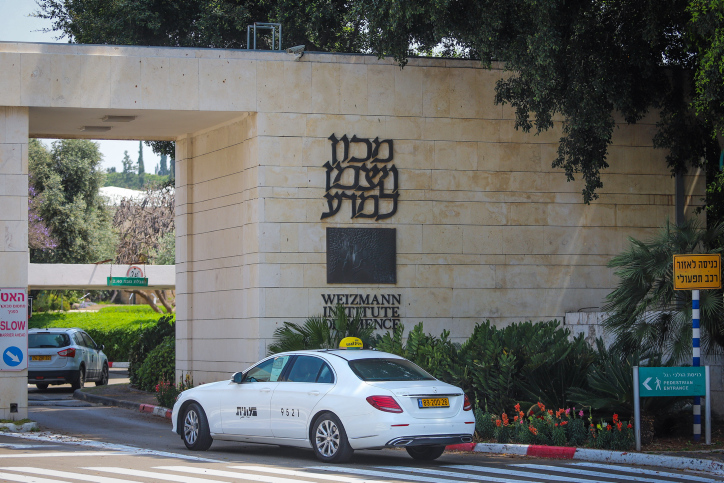
The discovery grew out of earlier experiments examining how cells respond when exposed to bacterial infection.
By Shula Rosen
Prof. Yifat Merbl of the Weizmann Institute of Science has been named to Nature’s 10, the journal’s annual list recognizing the people who most influenced science in 2025, following a major discovery about the human immune system — and amid the rebuilding of her lab after it was destroyed in an Iranian missile strike.
Nature highlighted Merbl’s work for revealing a previously unknown immune mechanism that operates inside ordinary human cells. The research showed that proteins routinely broken down by cells can produce short fragments that help combat bacteria, offering a constant, built-in form of protection.
Merbl, a systems biologist in Weizmann’s Department of Systems Immunology, said the finding challenges long-held assumptions about how immunity works. Rather than relying only on specialized immune cells, the body appears to generate protective compounds as part of its everyday maintenance process.
The discovery grew out of earlier experiments examining how cells respond when exposed to bacterial infection. Her team observed unexpected changes in protein fragments after infection, prompting them to investigate further.
Using computational tools, researchers then identified large numbers of similar antibacterial fragments hidden within standard human proteins.
Merbl said the implications could extend well beyond basic science. “In an era of growing antibiotic resistance, finding hundreds of thousands of potential immune peptides doesn’t just expand our understanding of the body’s defenses — it opens the door to innovative, safer therapies grounded in natural mechanisms,” she said.
The recognition comes after a devastating setback. Three months after the research was published, an Iranian missile struck the Wolfson building at Weizmann that housed Merbl’s laboratory.
She and her family live on campus and were nearby at the time. “The entire building was damaged, filled with debris and shattered glass,” she told Ynet.
With power cut and damage widespread, Merbl and her team worked alongside Home Front Command officers to rescue frozen samples and critical equipment before relocating. “It was immediate triage — save whatever we could and rebuild,” she said.
Merbl, who completed her doctorate at Harvard University and previously studied at Weizmann, said the institute’s collaborative environment made the discovery possible. She added that despite the destruction, the focus remains on continuing research. “Important things are happening here, and Israel has so much to offer the world,” she said.
Do You Love Israel? Make a Donation - Show Your Support!


Donate to vital charities that help protect Israeli citizens and inspire millions around the world to support Israel too!
Now more than ever, Israel needs your help to fight and win the war -- including on the battlefield of public opinion.
Antisemitism, anti-Israel bias and boycotts are out of control. Israel's enemies are inciting terror and violence against innocent Israelis and Jews around the world. Help us fight back!