
A senior adviser to parliament speaker Mohammad Bagher Ghalibaf dismissed the move as meaningless, warning it was “a ploy to buy time for a surprise strike.”
By United with Israel Staff
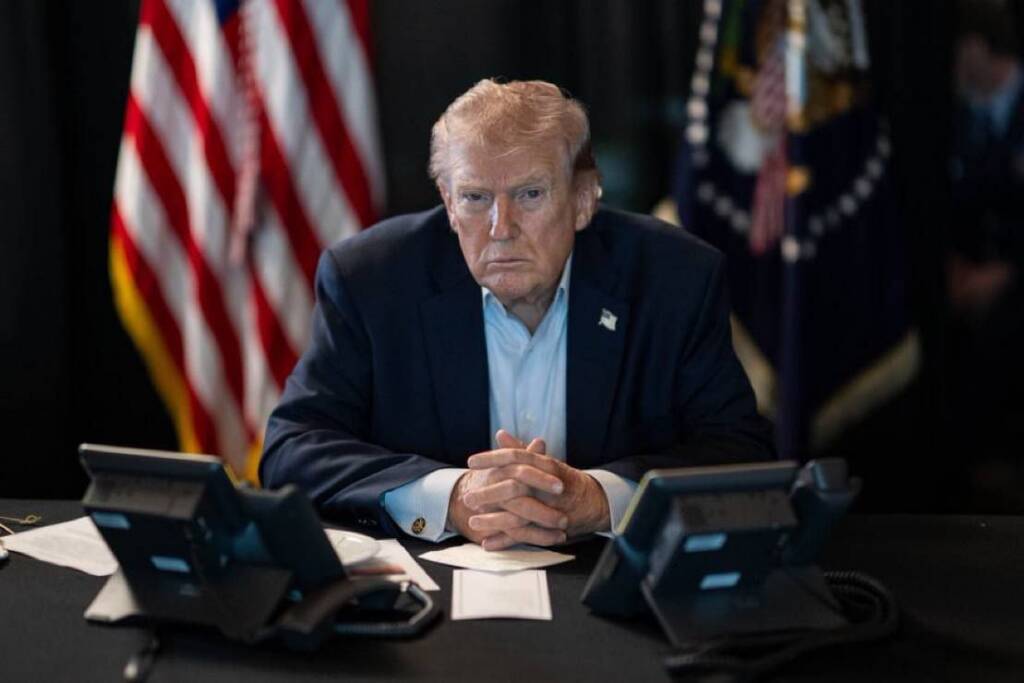
President Donald Trump announced Tuesday afternoon that he is extending the ceasefire with Iran, reversing earlier signals that he opposed prolonging the truce, as diplomatic uncertainty deepens.
In a statement, Trump said the decision followed a request from Pakistani officials, including Field Marshal Asim Munir and Prime Minister Shehbaz Sharif, citing internal divisions within Iran’s leadership.
“I have therefore directed our Military to continue the blockade and, in all other respects, remain ready and able,” Trump said, adding that the ceasefire would remain in place “until such time as their proposal is submitted, and discussions are concluded.”
Iran responded sharply. A senior adviser to parliament speaker Mohammad Bagher Ghalibaf dismissed the move as meaningless, warning it was “a ploy to buy time for a surprise strike” and declaring that “the time for Iran to take the initiative has come.” The adviser, Mahdi Mohammadi, added that “the losing side cannot dictate terms” and said continued U.S. pressure would have to be met with a military response.
The exchange came amid the collapse of planned U.S.-Iran talks. Earlier Tuesday, Iran signaled it would not participate in a new round of negotiations in Islamabad, prompting the cancellation of Vice President J.D. Vance’s trip to Pakistan after hours of delays.
According to Iran’s Tasnim News Agency, Tehran conveyed through Pakistani mediators that its decision not to attend the talks scheduled for Wednesday was final. The lack of response to U.S. proposals had already stalled coordination efforts, leaving Washington uncertain whether discussions would proceed.
The breakdown comes as a two-week truce involving Iran was set to expire Wednesday, with no clear path forward for diplomacy.
Late Tuesday, Trump intensified his rhetoric, pointing to economic pressure on Tehran and the impact of the U.S. naval blockade.
“Iran doesn’t want the Strait of Hormuz closed… they want it open so they can make $500 million a day,” he wrote, adding that lifting the blockade without a deal would be unacceptable. In a follow-up post, he claimed Iran was “collapsing financially” and “starving for cash.”
By Wednesday morning, Iran signaled its own conditions for returning to talks. Amir Saeed Iravani, Iran’s ambassador to the United Nations, said negotiations could resume in Islamabad, but only if the U.S. lifts its naval blockade.
The conflicting positions leave the ceasefire in place for now, but with diplomacy stalled and both sides hardening their demands, the next steps remain unclear.
Do You Love Israel? Make a Donation - Show Your Support!


Donate to vital charities that help protect Israeli citizens and inspire millions around the world to support Israel too!
Now more than ever, Israel needs your help to fight and win the war -- including on the battlefield of public opinion.
Antisemitism, anti-Israel bias and boycotts are out of control. Israel's enemies are inciting terror and violence against innocent Israelis and Jews around the world. Help us fight back!