
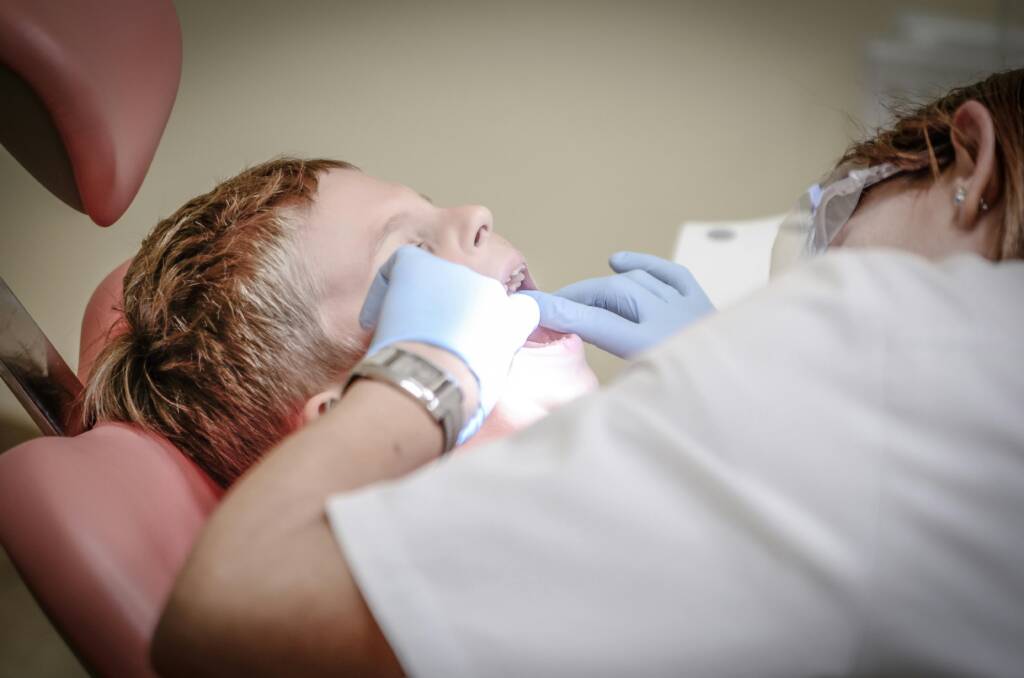
The Maccabident study found that prolonged exposure to security tension was linked to accelerated dental and skeletal development in children and teens.
By Shula Rosen
Children growing up under constant rocket alerts near the Gaza border are not only experiencing emotional strain but also showing measurable changes in how their bodies develop, including the timing of when their permanent teeth come in, according to new Israeli research.
The study, conducted by the Maccabident Research Institute, the dental division of Maccabi Healthcare Services, found that prolonged exposure to security tension was linked to accelerated dental and skeletal development in children and teens.
Researchers examined 272 patients ages 9 to 15 who underwent orthodontic assessments shortly after October 7, 2023.
Among them, 106 lived within seven kilometers of the Gaza Strip, while 166 were from central Israel. Developmental stages were evaluated using panoramic and cephalometric X-rays.
The findings were published in Scientific Reports under the title “Impact of conflict-induced stress on dental and skeletal development in children and adolescents,” authored by Dr. Thabet Asbi and Dr. Doron Haim, who also serve in the periodontology department at Rambam Health Care Campus.
“In this study, we investigated whether children and adolescents raised in a war-torn environment, marked by constant rocket fire and the pervasive sounds of war, exhibited accelerated physiological development,” Haim told The Jerusalem Post. “Specifically, it explored whether chronic stress due to prolonged exposure to a war environment could lead to advanced dental and skeletal maturation.”
Children with obesity, endocrine disorders, poor nutrition, or dental pathologies were excluded. The researchers did not observe stress-related tooth grinding, noting that baby teeth are later replaced by permanent ones.
The team reported earlier eruption of permanent second molars and upper canines among children from border communities, particularly the lower left second molar.
They wrote that “children living under the stress of a conflict zone exhibited earlier skeletal maturation and accelerated eruption of permanent second molars and upper canines than their peers. The early eruption of second molars and canines, particularly the lower left second molar, may serve as a predictive marker for pubertal progression.”
Haim explained that tooth eruption depends on bone resorption and eruptive force after most of the root forms, and that stress and anxiety can influence hormonal regulation affecting this timing.
The institute also uses its database for clinical research and collaborates with start-ups in pharma and dentistry to test new medical technologies.
Do You Love Israel? Make a Donation - Show Your Support!


Donate to vital charities that help protect Israeli citizens and inspire millions around the world to support Israel too!
Now more than ever, Israel needs your help to fight and win the war -- including on the battlefield of public opinion.
Antisemitism, anti-Israel bias and boycotts are out of control. Israel's enemies are inciting terror and violence against innocent Israelis and Jews around the world. Help us fight back!