
“As long as the occupation exists, the resistance will continue,” Qassem warned.
By United with Israel Staff
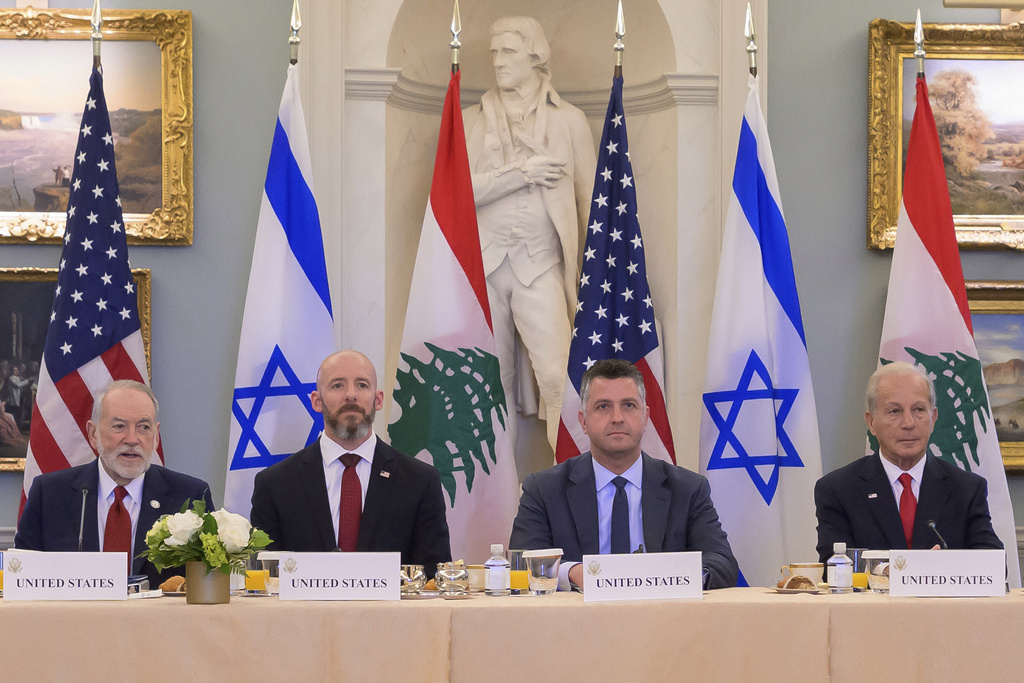
A fragile ceasefire between Israel and Lebanon took effect Thursday morning following intensive U.S.-mediated negotiations that Washington says could pave the way for a broader peace and security agreement between the two countries.
The agreement was reached after two days of talks between Israeli and Lebanese representatives during a high-level trilateral meeting convened by the United States on June 2 and 3.
In a joint statement released overnight, the parties announced that the ceasefire is contingent on “a complete cessation of Hezbollah fire and the evacuation of all Hezbollah operatives from the South Litani Sector.”
The sides also agreed to rapidly establish pilot zones in southern Lebanon where the Lebanese Armed Forces would exercise exclusive control “to the exclusion of all non-state actors,” a reference to Hezbollah and other armed groups operating outside government authority.
“These steps will enable progress toward a comprehensive peace and security agreement,” the statement said.
The agreement marks one of the most significant diplomatic developments between Israel and Lebanon in years and includes a commitment to continue direct negotiations under U.S. mediation. The parties agreed to reconvene political and security talks during the week of June 22 in an effort to advance a broader framework.
Notably, the statement declared that “the future of the relationship between Israel and Lebanon must be decided by the two sovereign governments” and rejected attempts by any state or non-state actor “to hold Lebanon’s future hostage.”
The United States also emphasized that any future arrangement must be negotiated directly between Jerusalem and Beirut and “not through any separate track,” an apparent reference to Hezbollah and its Iranian backers.
The ceasefire, however, got off to a shaky start.
Israeli and American officials were closely monitoring the first phase of Hezbollah’s withdrawal north of the Litani River when reports emerged of a hostile drone launch toward northern Israeli communities shortly after the agreement entered into force, raising fresh questions about whether Hezbollah intends to fully comply with its commitments.
Those doubts deepened later Thursday when Hezbollah Secretary-General Naim Qassem publicly rejected the U.S.-backed proposal, describing it as “surrender and defeat.”
Qassem objected to provisions requiring Hezbollah to halt attacks and withdraw its operatives from southern Lebanon while Israeli military operations continue. He insisted that any ceasefire must apply to all of Lebanon, include a full Israeli withdrawal, and end what he described as Israeli aggression.
“As long as the occupation exists, the resistance will continue,” Qassem said, while claiming Iran is working to secure a comprehensive ceasefire as part of broader efforts to end the conflict.
His remarks cast uncertainty over the agreement’s prospects and highlighted the challenge facing Lebanese officials attempting to implement a deal that depends on Hezbollah’s compliance.
The statement also included unusually direct language regarding Iran, with all parties condemning “Iran’s attacks on countries in the region” and activities that undermine stability through support for proxy forces and other acts of aggression.
Secretary of State Marco Rubio reportedly played a key role in securing the agreement after negotiations temporarily stalled. Lebanese media quoted President Joseph Aoun as telling reporters that the talks were extremely difficult and only resumed after Rubio personally intervened.
Israel reiterated during the negotiations that its security requires “the disarmament of Hezbollah and the dismantling of its infrastructure throughout Lebanon,” while Lebanon committed to strengthening the Lebanese Armed Forces, with American support, in order to assert effective control throughout the country.
The agreement follows weeks of escalating conflict that saw Hezbollah launch sustained rocket and drone attacks against northern Israel while Israeli forces expanded operations deeper into Lebanon, including the capture of the strategic Beaufort ridge south of the Litani River.
Early signs of implementation emerged Thursday as Israeli forces reportedly completed their withdrawal from the Debbine area of southern Lebanon.
Lebanese media reported that Lebanese Army units subsequently deployed to the area and began reopening the Marjayoun–Debbine–Ebel El Saqi road, one of the first visible steps toward implementing the agreement’s provision that Lebanese government forces assume control of territory previously contested by Hezbollah and Israeli forces.
Whether those initial steps can evolve into a lasting arrangement may now depend on a central question left unresolved by the agreement itself: whether Hezbollah is willing to accept terms that its leader has already publicly rejected.
Do You Love Israel? Make a Donation - Show Your Support!


Donate to vital charities that help protect Israeli citizens and inspire millions around the world to support Israel too!
Now more than ever, Israel needs your help to fight and win the war -- including on the battlefield of public opinion.
Antisemitism, anti-Israel bias and boycotts are out of control. Israel's enemies are inciting terror and violence against innocent Israelis and Jews around the world. Help us fight back!