
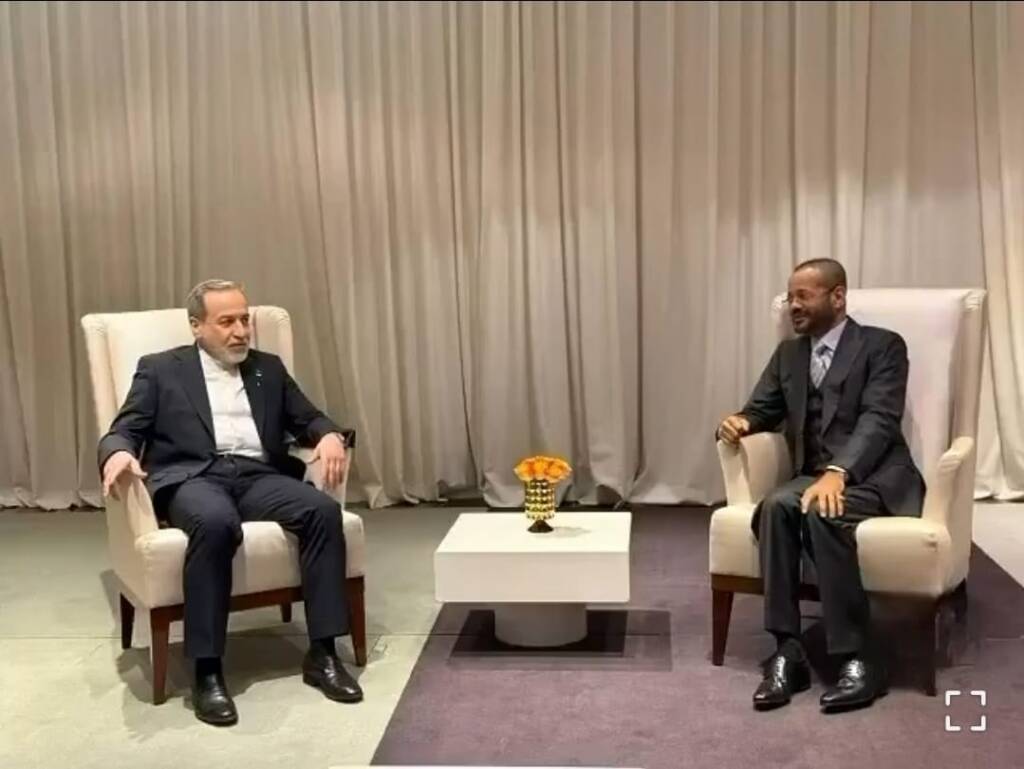
Omani Foreign Minister Badr Albusaidi called the talks constructive, saying progress was made but “much work remains ahead.”
By United with Israel Staff
Negotiations between Iran and the United States in Geneva concluded Tuesday with both sides signaling cautious progress toward a potential agreement, even as Iran’s Supreme Leader Ayatollah Ali Khamenei issued renewed warnings directed at Washington.
According to an American official speaking to Reuters, Iran is expected to submit detailed proposals within the next two weeks aimed at narrowing remaining gaps between the parties. “Progress has been made, but there are many details still to discuss,” the official said, underscoring that significant issues remain unresolved despite advances in the talks.
Iranian Foreign Minister Abbas Araghchi described the negotiations as productive, telling Iranian media that Tehran and Washington had reached understandings on “key principles.” He said the next phase would focus on drafting potential agreement texts and exchanging formal proposals.
“We reached agreements on the main issues,” Araghchi said, adding that the latest round marked “positive progress” compared with earlier discussions. He reiterated Iran’s longstanding claim that its nuclear program is intended solely for peaceful energy purposes and denied that Tehran has ever sought nuclear weapons.
The indirect negotiations were mediated by Oman, whose foreign minister, Badr Albusaidi, characterized the discussions as constructive. He said participants made meaningful progress in identifying shared objectives and technical frameworks for a possible agreement, while cautioning that “much work remains ahead” before another round of talks.
The diplomatic developments unfolded alongside escalating rhetoric from Iran’s leadership. Speaking during the negotiations, Khamenei insisted that Iran’s missile program remains off-limits to negotiation.
“The issue of the type of Iran’s missiles and their range belongs to the Iranian people, and the Americans have nothing to do with it,” he said. “The Americans know that if they make a mistake, what future awaits them.”
Earlier Tuesday, responding to repeated U.S. military warnings, Khamenei issued additional threats aimed at American forces in the region.
“The U.S. president keeps saying that his army is the strongest in the world,” he said. “The strongest army in the world can sometimes receive such a strong blow that it cannot rise again.”
Referring to American naval deployments, he added, “They constantly say we sent an aircraft carrier toward Iran. Well, an aircraft carrier is certainly a dangerous tool, but more dangerous than the aircraft carrier is the weapon that can send it to the bottom of the sea.”
His remarks came as the United States continues to reinforce its military presence in the region, including the deployment of the USS Gerald R. Ford aircraft carrier to the Middle East, highlighting the pressure surrounding the negotiations.
While diplomats reported incremental progress in Geneva, the parallel exchange of threats and military signaling underscored the fragile nature of the talks, with diplomacy advancing amid persistent warnings of potential escalation.
Do You Love Israel? Make a Donation - Show Your Support!


Donate to vital charities that help protect Israeli citizens and inspire millions around the world to support Israel too!
Now more than ever, Israel needs your help to fight and win the war -- including on the battlefield of public opinion.
Antisemitism, anti-Israel bias and boycotts are out of control. Israel's enemies are inciting terror and violence against innocent Israelis and Jews around the world. Help us fight back!