
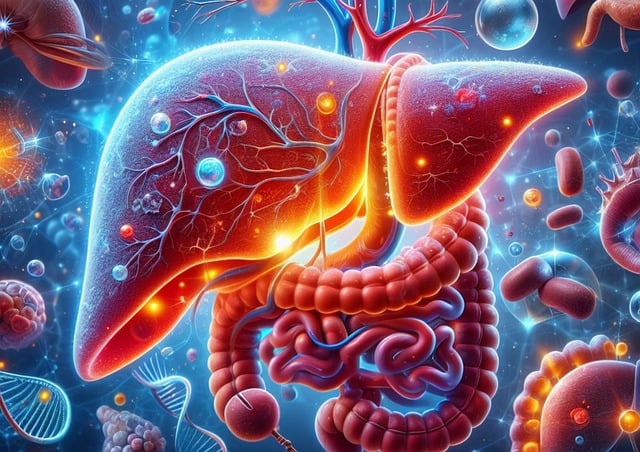
Researchers involved in HepaModulatoR hope their methods can interrupt the disease’s progression by helping cells repair themselves before the damage becomes irreversible.
By Shula Rosen
A major European research award is set to advance a joint Israeli–German effort to develop new RNA-based treatments for chronic liver disease, offering what scientists describe as a potential path toward therapies that are both safer and more precise than current options.
The €10 million European Research Council Synergy Grant will support the project known as HepaModulatoR, which brings together teams from Bar-Ilan University and the University of Tübingen.
The program is being led in Israel by Prof. Erez Levanon of Bar-Ilan University’s Goodman Faculty of Life Sciences.
His group will receive €2.5 million from the overall grant to advance RNA-editing technologies designed to help the body correct cellular damage linked to liver failure.
The research partnership spans computational modeling, molecular engineering and preclinical testing, combining expertise from chemistry, biology and bioinformatics.
Prof. Levanon said the collaboration is intended to establish the foundation for a new approach to treating liver disease. “This project brings together top scientists in biology, chemistry, and bioinformatics,” he said in a press release. “By combining our strengths, we aim to set the stage for a new generation of medicines that could change how we treat liver and other diseases.”
Chronic liver disease, driven by infections, metabolic disorders, autoimmune conditions or long-term damage from alcohol and diet, remains one of the most common causes of severe organ failure worldwide.
Once the liver begins to lose its ability to regenerate, existing treatments are limited, and patients often progress to cirrhosis or cancer.
Researchers involved in HepaModulatoR hope their methods can interrupt that progression by helping cells repair themselves before the damage becomes irreversible.
A central feature of the project is its emphasis on RNA editing rather than permanent DNA modification.
The teams are developing tools that adjust temporary RNA instructions inside cells, an approach the scientists say provides a reversible and more controlled alternative to gene therapy. “We’re developing ways to help the body fix its own mistakes safely and naturally,” Prof. Levanon explained, noting that the techniques under development do not alter DNA and can be fine-tuned as needed.
The grant positions the Israeli–German partnership to move forward on a coordinated, multidisciplinary track, with the long-term aim of creating a broader class of RNA-based therapies that could eventually extend beyond liver disease.
Do You Love Israel? Make a Donation - Show Your Support!


Donate to vital charities that help protect Israeli citizens and inspire millions around the world to support Israel too!
Now more than ever, Israel needs your help to fight and win the war -- including on the battlefield of public opinion.
Antisemitism, anti-Israel bias and boycotts are out of control. Israel's enemies are inciting terror and violence against innocent Israelis and Jews around the world. Help us fight back!