
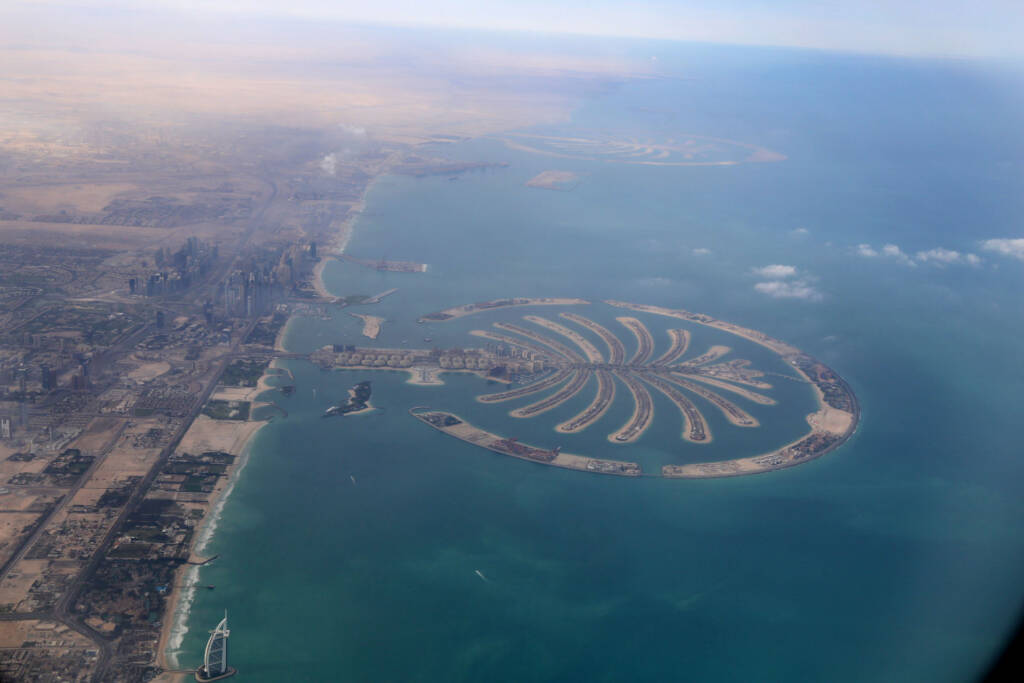
The island would host offices, commercial zones and residential towers, developed by a private company under a build-operate-transfer model.
By Shula Rosen
Bat Yam is floating an ambitious plan to remake its Mediterranean skyline with a Dubai-style artificial island, issuing a call for proposals to build a 1.5-kilometer offshore development that city leaders say is essential to the municipality’s future growth.
The southern coastal city, just south of Tel Aviv, is seeking ideas from architects, planners and developers for an island that would rise about a kilometer from shore and be linked to the mainland by a bridge.
The concept echoes the artificial islands built in Dubai, a comparison that city officials have openly embraced as they court international interest and private capital.
Mayor Tzvika Brot argues the project is driven less by spectacle than by necessity. Hemmed in by neighboring cities, Bat Yam has little remaining land for expansion. “Bat Yam is trapped between Tel Aviv, Holon and Rishon LeZion. We have nowhere to expand,” Brot said. “The only options are to grow upward, meaning build higher, or to build into the sea,” he told Calcalist.
Under the proposal, the island would host offices, commercial zones and residential towers, developed by a private company under a build-operate-transfer model. Municipal estimates put the cost of constructing the island itself at roughly $13 billion, with total development costs reaching about $30 billion. Expected developer profits have been projected far higher, a stark contrast to Bat Yam’s annual municipal budget of about 1.3 billion shekels.
Brot said he has raised the issue with senior government officials despite the absence of formal approvals. “If I wait for the government, it won’t happen,” he said. “My goal is to see this happen in a short time frame.”
The plan revives a long-running national debate over offshore construction. Previous government studies examining artificial islands, including for aviation use, warned that Israel’s open-sea conditions and powerful winter storms pose engineering challenges not found in calmer waters elsewhere. Those studies also flagged environmental risks, particularly disruption to the natural south-to-north flow of sand that replenishes Israel’s beaches.
Environmental groups have already voiced sharp opposition. “The Bat Yam Municipality is acting as if there is no climate crisis and Mediterranean storms do not exist,” the Israel Union for Environmental Defense said, warning of blocked views, beach erosion and heavy public costs.
Government ministries said the proposal remains under review, stressing that no professional assessments have yet been formally approved. Even so, Bat Yam’s leadership is pressing ahead, betting that a Dubai-inspired vision could reshape the city’s future — and test the limits of coastal development in Israel.
Do You Love Israel? Make a Donation - Show Your Support!


Donate to vital charities that help protect Israeli citizens and inspire millions around the world to support Israel too!
Now more than ever, Israel needs your help to fight and win the war -- including on the battlefield of public opinion.
Antisemitism, anti-Israel bias and boycotts are out of control. Israel's enemies are inciting terror and violence against innocent Israelis and Jews around the world. Help us fight back!