
Tel Shiloh, situated in the hill country of Ephraim, is described in the Bible as Israel’s first religious center after the Exodus.
By Shula Rosen
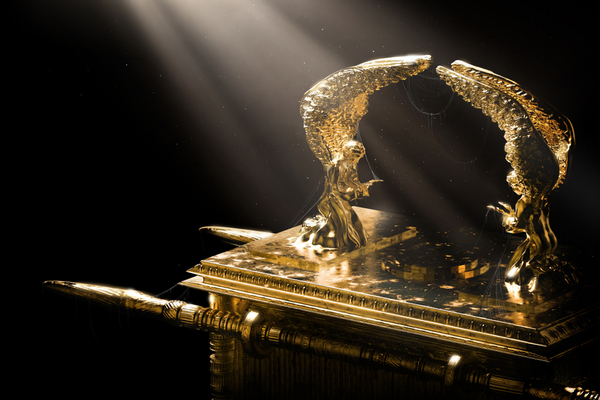
Archaeologists excavating Tel Shiloh in Samaria believe they have uncovered remains of a monumental building that could have served as the resting place of the Aron Habrit—the Ark of the Covenant—described in the Torah as the sacred, gold-covered chest that held the Luchot Habrit brought by Moses from Mount Sinai.
The team, led by Dr. Scott Stripling, identified the stone foundations of an Iron Age I structure whose dimensions and layout closely match biblical descriptions of the Mishkan, or Tabernacle.
According to Stripling, the building is oriented east to west and divided into two sections in a two-to-one ratio, mirroring the Holy Place and the Holy of Holies as described in Exodus 26.
Around the site, researchers unearthed more than 100,000 animal bones—primarily from sheep, goats, and cattle—with a notable pattern: most came from the right side of the animals.
This detail, Stripling noted, aligns with Leviticus 7:32, which instructs that the right thigh of sacrificial offerings be given to the priests.
Pottery fragments found alongside the bones date to the same period, reinforcing the connection to early Israelite worship before the construction of the Temple in Jerusalem.
Tel Shiloh, situated in the hill country of Ephraim, is described in the Bible as Israel’s first religious center after the Exodus.
The Book of Samuel recounts that the high priest Eli served here until the Ark was taken to the battlefield against the Philistines, captured, and never returned.
According to the account, when Eli—then 98 years old and nearly blind—learned that the Ark had been seized and his sons killed, he fell backward at the city gate, broke his neck, and died. Stripling’s team believes they may have located that very gate.
The discovery has revived interest in one of history’s enduring mysteries: the fate of the Ark.
While the Bible records its presence in Shiloh for centuries, it disappears from scripture before the Babylonian destruction of Jerusalem in 586 BCE.
Some scholars believe it was later moved to Jerusalem, while others suggest it was hidden elsewhere.
Although no trace of the Ark itself has been found, the structure at Shiloh—along with compelling evidence of sacrificial practices—offers a vivid glimpse into the spiritual life of ancient Israel and may bring archaeologists a step closer to solving the riddle of the Ark’s final resting place.
Do You Love Israel? Make a Donation - Show Your Support!


Donate to vital charities that help protect Israeli citizens and inspire millions around the world to support Israel too!
Now more than ever, Israel needs your help to fight and win the war -- including on the battlefield of public opinion.
Antisemitism, anti-Israel bias and boycotts are out of control. Israel's enemies are inciting terror and violence against innocent Israelis and Jews around the world. Help us fight back!